Read this lesson after you understand what an offer begins and before you treat the inspection report like a final judgment. This lesson is not about becoming a home inspector. It is about understanding what the inspection is for, what it can reveal, and how it helps you make a clearer decision during one of the most important windows in the transaction.
That a home inspection is a visual review of accessible areas and systems, not a pass/fail test — and that the inspection period is a decision window, not just an appointment. You will also understand why Florida buyers may need to manage two parallel tracks: the buyer understanding track and the insurance review track.
Where You Are Likely Standing Right Now
Your offer was accepted. You scheduled the inspection. Now you are waiting — or maybe the report just arrived and you are staring at a long document full of observations you are not sure how to interpret.
You may feel excited. You may also feel anxious. You may be afraid the inspector found something terrible. You may think every item in the report is a crisis. You may not understand why your insurance agent is also asking for a 4-point inspection, wind mitigation report, or roof documentation on top of everything else.
That mixture of feelings is completely normal. It is also the moment this lesson is designed for.
The inspection does not exist to make you afraid of every crack, stain, or repair note. It exists to help you see the property more clearly before you move forward.
The Inspection Room is not the fear room. It is the understanding room.
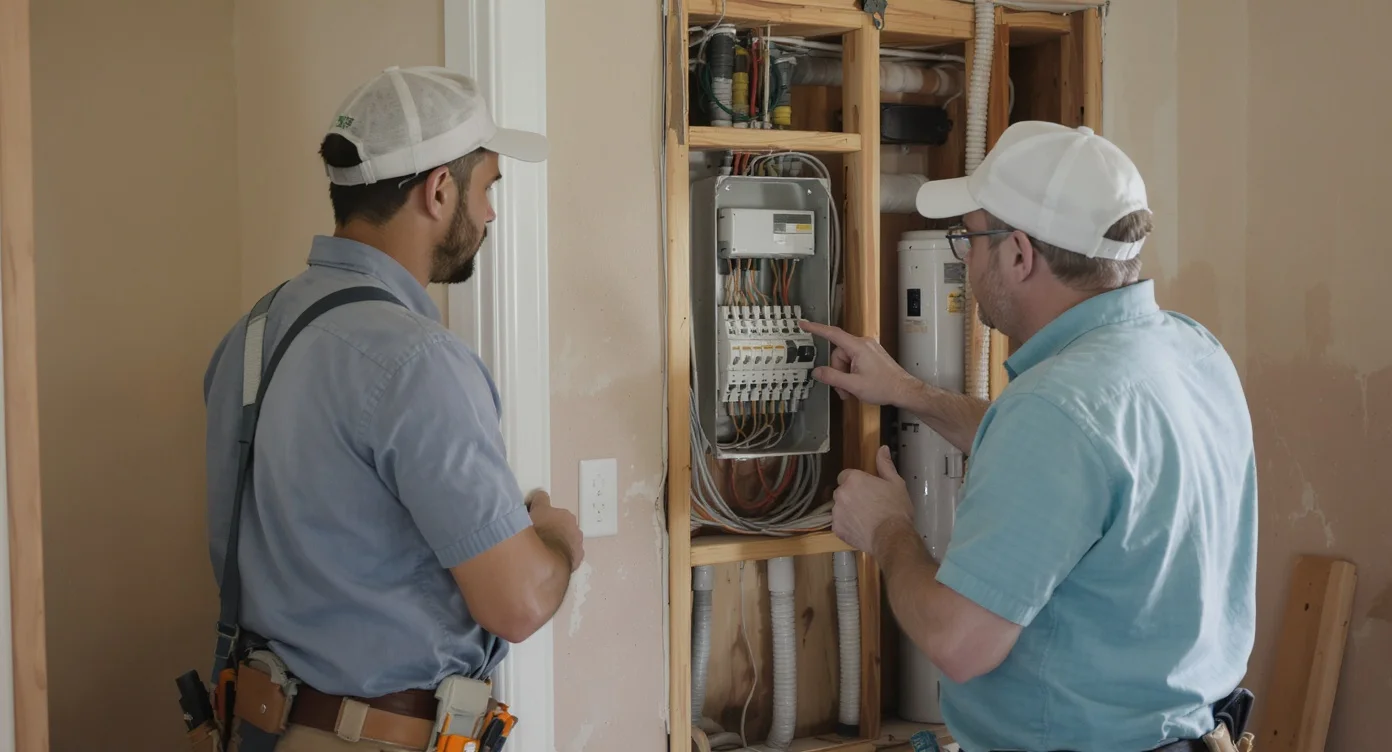
Four Things Most First-Time Buyers Get Wrong About Inspections
Misunderstanding 1: The inspection is pass/fail.
It is not. A home inspection is a visual review of accessible areas and systems. The report is a list of observations, not a verdict. There is no passing score and no failing score.
Misunderstanding 2: The inspector can see everything.
A general home inspection is visual and non-invasive. Inspectors review visible and accessible areas. They do not open walls, see under slabs, predict hidden defects, or guarantee future performance.
Misunderstanding 3: A long report means the home is bad.
A long report often means the inspector documented carefully. Some items may be minor maintenance. Some may need further review. Some may be more serious. The length of the report is not the message. The content is.
Misunderstanding 4: One inspection answers every question, including insurance.
A general home inspection helps the buyer understand visible property condition. It does not replace 4-point inspections, wind mitigation inspections, termite/WDO evaluations, mold assessments, structural reviews, roof specialist evaluations, seawall inspections where applicable, or the insurance carrier's review. Each serves a different purpose for a different audience.
What the Inspection Gives the Buyer
A useful way to think about the inspection is as a four-part picture of the property.
The Two Inspection Tracks Florida Buyers Need to Understand
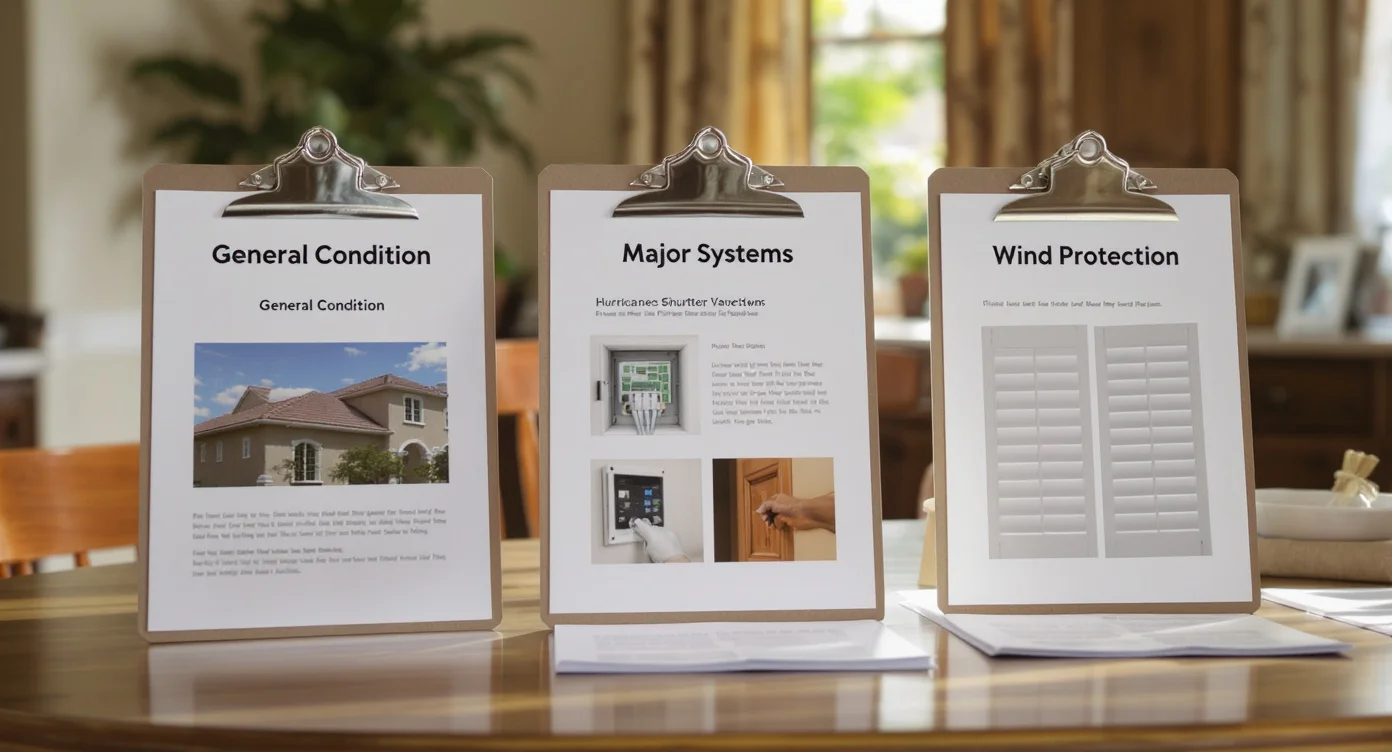
In South Florida, the word “inspection” may be used for several different types of evaluations. That can create confusion. A prepared buyer separates the tracks.
Track 1 — Buyer Understanding Track: The general home inspection helps the buyer understand visible property condition, systems, maintenance concerns, safety concerns, and questions that may affect comfort, repair planning, and the decision to continue.
Track 2 — Insurance Review Track: The 4-point inspection, wind mitigation inspection, roof-related documentation, and other carrier-requested information may help the insurance carrier or underwriter evaluate insurability, risk, credits, discounts, eligibility, or policy conditions.
Purpose: Understand visible and accessible condition, systems, maintenance concerns, safety concerns, and questions that may affect comfort, repair planning, and the decision to continue.
Audience: The buyer, buyer’s agent, and decision-making team.
Main Question: What am I buying, and what do I need to understand before moving forward?
Purpose: Review roof, electrical, plumbing, and HVAC information for insurance underwriting review. May help the insurance carrier evaluate eligibility, risk, or policy conditions.
Audience: Insurance carrier and underwriter.
Main Question: Does this property meet the carrier’s guidelines? (Determined by the carrier, not the buyer.)
Purpose: Document wind-resistant features of the home. May help the insurance carrier evaluate wind-related credits, discounts, or underwriting review depending on carrier guidelines.
Audience: Insurance carrier and underwriter.
Main Question: What wind-resistant features can be documented? (Whether those features affect pricing is determined by the carrier.)
A general inspection can help the buyer understand the home but may not answer every insurance question.
A buyer in South Florida may need to track both understanding and insurability before the inspection period ends.
Insurance requirements should be confirmed with the insurance professional and carrier, not assumed from the general inspection report.
Florida buyers may encounter inspection reports that serve different purposes. A general home inspection helps the buyer understand property condition. Insurance-related reports, such as 4-point and wind mitigation forms, may help an insurance carrier evaluate risk, eligibility, or possible credits. This lesson is educational only. Buyers should confirm insurance requirements with their insurance professional and carrier.
Florida Office of Insurance Regulation — Wind Mitigation Resources
Florida Department of Financial Services — Mitigation
Citizens Property Insurance — Roof and 4-Point Inspection Form Updates
The Inspection Is Like Turning On the Lights
The inspection is like turning on stronger lights in a room you have already walked into.
The lights do not create the cracks, stains, old systems, moisture marks, roof age, or maintenance concerns. The lights help you see what was already there.
The purpose of the inspection is not fear. The purpose is clearer vision. A buyer who understands this can read an inspection report as information — not as an attack on a home they already started loving.
Brighter light is not bad news. It is better information. What the buyer does with that information depends on what the written contract allows and what they decide is right for their life.
The Inspection Report Is Like a Doctor’s Checkup Report
It lists observations, measurements, concerns, and items that may need follow-up. Some findings are normal. Some need monitoring. Some need action. The report is not a grade — it is a starting point for better questions.
The inspection report works the same way. It may show normal wear, maintenance items, safety concerns, system age, moisture concerns, further evaluation recommendations, and repair questions.
A good doctor does not say “you passed” or “you failed.” A good inspector does not say “the house passed” or “the house failed.” Both provide information so the patient — or the buyer — can make a more informed decision.
The goal is not a clean report. The goal is a clear picture.
What a General Home Inspector Usually Looks At
A general home inspection often reviews visible and accessible areas and systems, depending on scope and inspection agreement. Common areas may include:
Roof covering and visible roof-related components where accessible — Exterior surfaces, grading, and drainage observations — Foundation or visible structure indicators — Attic where accessible — Electrical panel and visible electrical concerns — Plumbing fixtures and visible plumbing concerns — HVAC system operation and visible condition — Water heater age and visible condition — Windows and doors — Appliances if included in the inspection scope — Signs of moisture intrusion or water-related concerns — Visible safety concerns
This list is illustrative, not exhaustive. The inspection scope depends on the inspector’s agreement, the property, and what was visible and accessible on inspection day. The report reflects a snapshot of what the inspector observed during that visit.
What a General Home Inspection Usually Does Not Do
Understanding the limits of the general inspection is part of using it well. A general home inspection usually does not:
Open walls or move heavy furniture — Guarantee future performance of systems — Guarantee insurance approval — Guarantee code compliance — Guarantee that hidden defects do not exist — Replace a roof specialist — Replace a structural engineer — Replace a mold assessment — Replace a termite or WDO inspection — Replace a 4-point inspection — Replace a wind mitigation inspection — Replace a seawall inspection where waterfront property is involved — Replace legal or contract advice — Replace insurance underwriting review
This is not a weakness. It is simply the nature of a visual, non-invasive inspection. Understanding this helps the buyer know when additional specialist evaluations may be appropriate — and why the insurance carrier may also request separate documentation before confirming coverage.
The Inspection Appointment and the Inspection Period Are Not the Same Thing
The inspection appointment is when the inspector visits the property.
The inspection period is the written window of time in the contract during which the buyer may evaluate, ask questions, confirm information, and make decisions.
During the inspection period, depending on the written contract, the buyer may have time to: complete inspections, read and understand the report, ask the inspector questions, seek specialist estimates, discuss findings with their agent, consider repair or credit requests where appropriate, confirm insurance requirements, provide insurance-related reports where needed, and decide whether they are comfortable continuing.
Many Florida buyers encounter AS IS residential contract forms. In an AS IS context, the inspection period may be especially important because the buyer is deciding whether they can accept the property condition as they understand it. The written contract controls. Deadlines must be tracked exactly.
Missing the inspection period deadline may change the buyer’s options. The buyer should confirm the exact deadline with their agent and professional team — not estimate it.
What a Prepared Buyer Asks After Receiving the Inspection Report
A prepared buyer does not ask: Did the house pass?
A prepared buyer separates the report into categories and asks questions that connect back to what was already learned in this series.
From Lesson 003 (Monthly Payment): Which findings may affect near-term repair costs and monthly ownership comfort?
From Lesson 004 (Property Search): Which findings confirm what was already suspected — and which findings are new information?
From Lesson 005 (Offer Room): What options does the written contract give me, and how much time remains in the inspection period?
From this lesson: Which findings may affect insurance review? Which findings may require a 4-point, wind mitigation, roof specialist, termite/WDO, mold, structural, or seawall evaluation? Has my insurance professional confirmed what reports are needed?
A buyer who can answer these questions during the inspection period is not reacting. They are evaluating. That is the difference between a buyer who understands the Inspection Room and one who is afraid of it.
After Receiving the Inspection Report — Ask These
These are the questions a prepared buyer works through after the inspection report arrives — before the inspection period ends.
- Am I reacting emotionally to the report, or am I trying to understand it?
- Which items in this report are cosmetic or minor maintenance?
- Which items may require a specialist evaluation — roof, electrical, plumbing, HVAC, mold, termite/WDO, structural, or seawall where applicable?
- Which items may affect insurance? Has my insurance professional reviewed what reports may be needed?
- Which items may affect near-term repair costs or monthly ownership comfort?
- Which items may affect safety?
- Do I need a 4-point inspection? Do I need a wind mitigation inspection?
- What did the inspector note as beyond the scope of the inspection or requiring further evaluation?
- Has my insurance quote been confirmed based on this property and any insurance-required reports?
- How much time remains in my inspection period? What is the exact deadline according to the written contract?
- What options does the written contract give me during this period?
- What do I still need to understand before that deadline arrives?
The inspection report is not trying to ruin the house. It is trying to remove the blindfold. A longer inspection report gives the buyer more information to work with, not more reasons to panic. The question is not “did the house pass?” The question is “what do I now understand about it?”
A prepared buyer does not need a perfect inspection report. A prepared buyer needs a clear understanding of what the report means. In South Florida, a prepared buyer also needs to understand whether inspection findings may affect insurance conversations — and whether separate insurance-track reports may be needed before the inspection period ends.
Ask yourself this: If this inspection report arrived tonight, would you know how to separate fear from facts — or would every note feel like a crisis? And would you know which findings are for your understanding versus which findings may matter to the insurance carrier?
Before You React to the Report
When the inspection report arrives, take a breath before you respond. Then ask yourself these questions.
“Am I reading this inspection report to understand the home, or am I looking for one simple answer: good house or bad house?”
Add to that reflection: “Do I understand which inspections are for my decision and which reports may be needed for insurance review?” These are not the same question — and both may need answers before the inspection period ends.
What Comes Next
This lesson covered the Inspection Room — what inspections are, what they review, why the report is not pass/fail, why the inspection period is a decision window, and why Florida buyers may need to manage two parallel tracks.
The next lesson enters the Insurance and Taxes Room.
Some inspection findings connect directly to that room. Roof age, electrical concerns, plumbing age, HVAC condition, water heater concerns, water intrusion, wind mitigation features, and visible property condition can all affect insurance conversations, insurance quotes, monthly cost, repair planning, and ownership comfort.
You now know how to read an inspection report without panic. The next step is understanding how what you learned in the Inspection Room may affect the insurance and tax reality of the home.
The inspection gave you information. The Insurance Room will help you understand what that information may cost and what it may mean for coverage.
Build an Inspection Readiness Picture for One Property
Take one property you are considering — or imagine one you have been thinking about — and create five mental or written columns. This is a learning exercise, not an instruction to inspect a property or make a transaction decision.
What I saw in the listing — What attracted you, what stood out, what the photos showed.
What I would want inspected — Roof age, HVAC age, plumbing, electrical, drainage, moisture signs, structure.
What systems may affect future costs — Which aging or visible systems might create near-term replacement or repair expenses.
What may affect insurance review — Roof, electrical panel, plumbing material, HVAC, water heater, wind mitigation features.
Questions I would need answered before the inspection period ends — What I still need to understand before a deadline requires a decision.
The columns where you have the most uncertainty are the areas where informed questions — not panic — will make the difference.
Lesson 006 FAQ
Does a home pass or fail inspection?
Does a home inspector find everything wrong with a house?
Should I panic if the inspection report is long?
Is the inspection period just the day of the inspection?
Does a general inspection replace a 4-point, wind mitigation, termite, mold, roof, structural, or seawall inspection?
Why are 4-point and wind mitigation inspections different from a general home inspection?
This lesson has been created under Book One — The Philosophy of Understanding, the Realtor007.ai School Professor Teaching Standard, the completed Professor Formation Foundation Arc, the Subject Lesson Builder Standard, and the Multi-Analogy Teaching Principle. It is approved for professor review draft only. Roland Ruiz must personally review and approve this lesson before it can be marked Approved for Professor Use.
If a word, idea, or step in this lesson feels confusing, ask the School Guide to explain it in simpler language before you move forward. You do not need to figure it out alone.
The School Guide is powered by the Realtor007.ai AI assistant. Your questions stay private and are not shared with third parties.
The AHA Moment
What You Should Understand Now
An inspection is not there to make a home perfect. It is there to help you see the home clearly before the decision becomes final. The AHA is that inspection findings are not just problems. They are information that helps you decide whether to continue, renegotiate, repair, or walk away.
Lesson Reflection Check
Five Questions Before You Continue
These questions are not graded. Tap each question to reveal a short guide answer and use it to check your understanding before you continue.
1 Why is an inspection a decision tool?
An inspection gives the buyer information about the home's condition so they can make an informed decision, rather than acting as a pass or fail test.
2 Why does every inspection report need calm interpretation?
Inspection reports often list many items, but not every item is serious. Calm interpretation helps separate minor notes from items that truly affect safety or cost.
3 What types of issues might affect safety, cost, or insurance?
Roof condition, electrical systems, plumbing, and structural issues are common items that can affect safety, future repair costs, or insurability.
4 Why does a problem in a report not automatically mean the home is bad?
Most homes have some findings in an inspection. The goal is understanding what each item means, not assuming every note is a reason to walk away.
5 What would help you review inspection findings without panic?
Reading the report with a clear head, asking questions about anything unclear, and focusing on safety and cost rather than the length of the list can help.
The Homebuyer Qualification Quiz helps you connect what you are learning to your own starting point before inspection findings, insurance questions, deadlines, and repair concerns become part of a real decision.