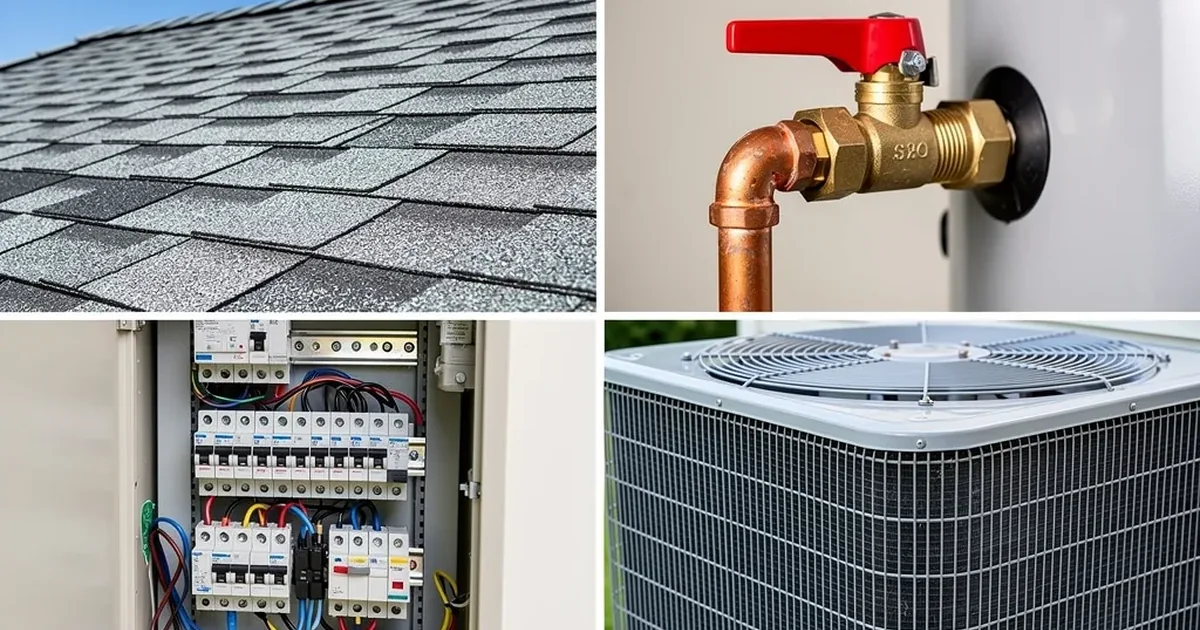
What Is a 4-Point Inspection?
A 4-point inspection is an assessment that covers exactly four systems of a home: roof, electrical panel, plumbing, and HVAC (heating, ventilation, and air conditioning). It is not a full home inspection — it is specifically designed to give insurance companies the information they need to decide whether to insure a home and at what rate.
In South Florida, most insurance companies require a 4-point inspection for any home that is 20 or more years old before they will issue a new homeowners policy. Without the inspection — and without an insurance policy — your lender cannot close your loan. This makes the 4-point inspection one of the most practical documents in a South Florida home purchase.
Understanding what each section of the 4-point covers — and how a licensed GC reads it differently than a standard buyer's agent — is what this guide is about.
Section 1 — The Roof
The roof section of a 4-point inspection is the most consequential. Insurers want to know three things: the material, the condition, and the approximate remaining useful life. Here is what each answer means:
- Concrete/clay tile roof: The most insurable roof in South Florida. Life expectancy 25–50+ years. If the deck (the wood layer under the tiles) is in good condition, tile roofs are highly favorable on a 4-point
- Shingle (3-tab or architectural): Life expectancy 15–25 years in South Florida's heat and UV exposure. Insurance companies watch age carefully — a shingle roof over 15 years old may trigger surcharges or denial
- Modified bitumen / flat roof: Common on older South Florida construction and added sections. Life expectancy 10–20 years. Age and seam condition are what insurers look at
- Roof age 15+ years: Many insurers require replacement within 2–3 years as a condition of issuing a new policy. Some refuse to insure at all. This is the most common 4-point red flag I see in South Florida
When a 4-point shows a 17-year-old shingle roof, a standard agent tells the buyer "the roof is old." I tell the buyer the roof replacement will cost $12,000–$18,000 for a typical single-family South Florida home — and that this is a negotiating point, not a reason to walk away. Depending on the seller's motivation, that cost can come off the purchase price or be completed by the seller before closing.
The GC advantage is converting a vague red flag into a specific dollar amount that changes the negotiation.
Section 2 — The Electrical Panel
The electrical section of the 4-point is where the most serious and least obvious issues appear. Insurers are looking for panel types and configurations that present fire risk. The two they will refuse to insure or charge significant surcharges for:
- Federal Pacific Stab-Lok panels: Installed predominantly in the 1960s–1980s. The breakers are documented to fail to trip under overload — the condition that prevents fires. Multiple studies and insurance industry data have established this as a fire hazard. Replacement cost: $2,500–$4,500
- Zinsco panels: Also installed in the 1960s–1980s with similar documented failure-to-trip issues. Often identified by the colored breakers (blue, green, red). Replacement cost: $2,500–$4,500
- Aluminum wiring: Used in some homes in the 1960s–1970s as a cheaper alternative to copper. Creates fire risk at connection points due to expansion/contraction. Does not automatically disqualify a home, but requires specific handling and documentation
- Double-tapped breakers: Two wires connected to a single breaker designed for one wire. Common in older panels after modifications. May be addressed as part of an electrical inspection rather than requiring panel replacement
Section 3 — The Plumbing
The plumbing section focuses on the material of the water supply and drain lines. Materials that cause insurance concern:
- Galvanized steel supply lines: Common in pre-1970 construction. Corrode from the inside out, restricting flow and eventually leaking. Visible when cut — the interior looks rusted. Replacement cost: $4,000–$12,000 depending on home size
- Polybutylene (PB) pipe: Installed from the 1970s through mid-1990s. Chlorine in municipal water causes the pipe to degrade from the inside. Has been the subject of major class action lawsuits. Gray or blue flexible plastic pipe. Many insurers refuse to insure homes with PB or charge significant surcharges. Full replacement: $4,000–$15,000
- Cast iron drain lines: Standard in South Florida construction through the mid-1970s. These drain lines corrode from the inside, causing slow drains, backups, and eventual collapse. Camera inspection of the main drain line is the only way to accurately assess their condition
- Copper supply lines: The modern standard. Very insurable, long service life. Copper in South Florida homes post-1980 is typically in good condition
Section 4 — HVAC (Air Conditioning)
In South Florida's extreme heat, air conditioning is not optional — it is a life safety system. The HVAC section of the 4-point focuses on age and condition. Key facts:
- Typical AC lifespan in South Florida: 8–12 years (vs. 15 nationally due to constant year-round use and humidity stress)
- What insurers look for: Functional, age-appropriate systems. Excessively old systems (15+ years) may trigger surcharges or require replacement before issuance
- What I look for as a GC: Refrigerant type (older R-22 systems are being phased out — replacement refrigerant is expensive), duct condition, air handler location (attic vs. closet affects replacement access and cost), and whether the system is appropriately sized for the home's square footage
- Replacement cost: A complete AC system replacement (air handler + condenser) in South Florida runs $5,000–$12,000 depending on tonnage and access
Answer a few simple questions and discover homebuyer programs, financing options, grants, and next steps — tailored to your South Florida situation.
Take The Homebuyer Qualification Quiz ›How to Respond When a 4-Point Reveals Issues
A failed or concerning 4-point does not automatically mean you walk away from the property. It means you have information — and information is negotiating power:
- Get contractor estimates for remediation costs. The 4-point identifies the issue; a GC quantifies the cost. Roland provides this assessment as part of buyer representation
- Ask the seller to remedy before closing. Roof replacement, panel replacement, or PB pipe remediation can often be negotiated as seller-paid repairs or credits at closing
- Ask for a price reduction equal to remediation cost. If the seller won't repair, the cost should come off the purchase price — you are buying a home with a known defect
- Verify insurability before committing. With any 4-point issue, confirm with 2–3 South Florida insurers that they will issue a policy under specific conditions (after remediation) before finalizing your position