
The Reality of Florida Home Insurance in 2026
Florida's home insurance crisis is not an abstract news story — it is a practical, immediate obstacle that every South Florida homebuyer must understand before making an offer on any property. The cost of homeowners insurance directly affects how much house you can afford, whether your loan will be approved, and how much your monthly payment will actually be.
Here is the state of the market: Over 20 insurance carriers have exited Florida since 2022. Citizens Property Insurance — the state-backed insurer of last resort — grew to over 1.3 million policies. Average South Florida homeowners insurance is now $4,000–$8,000 per year for a typical single-family home. That is $333–$667 per month added to your mortgage payment through your escrow account.
The good news in 2026: Governor DeSantis announced insurance reforms that are producing the first meaningful rate reductions in years. Miami-Dade is seeing average reductions of 13.9%, Broward 14.1%, Palm Beach 11.9%. The crisis is stabilizing — but understanding how it affects your specific purchase remains essential.
How Insurance Affects Your Mortgage Approval
This is the connection most buyers don't make until it's too late. Your lender requires proof of homeowners insurance before closing — and the premium goes into your escrow account, which means it directly affects your monthly payment and therefore your debt-to-income ratio.
A buyer qualifies for a $450,000 mortgage at 7% interest. Monthly P&I payment: $2,994. They budgeted $200/month for insurance based on a number they found online.
The actual insurance quote for the 1985 home they want to buy comes back at $7,200/year ($600/month). Their escrow payment is $600 instead of $200. Their total PITI (Principal, Interest, Taxes, Insurance) jumps $400/month — pushing their DTI above the lender's limit. They either need to find a cheaper home or a cheaper-to-insure property.
Get insurance quotes before you fall in love with any property.
What Determines Your Insurance Cost in South Florida
As a licensed General Contractor, I evaluate every property for its insurability before recommending an offer. These are the factors that directly drive insurance cost:
- Roof age and material: The single biggest factor. A home with a roof 15+ years old will face dramatically higher premiums — many carriers won't insure it at all. A new roof can reduce premiums 20–40% and is often the seller negotiating point I recommend pursuing
- Roof shape: Hip roofs (sloping on all four sides) have significantly lower premiums than gable roofs. This is one of the wind mitigation factors that a wind mitigation inspection documents
- Opening protection: Impact-resistant windows and doors or hurricane shutters reduce premiums meaningfully. A home with full opening protection throughout gets wind mitigation credits; a home with mixed protection gets partial credit
- Year built: Pre-1992 construction doesn't meet current wind load requirements. Post-2001 construction built to current Florida Building Code has the best insurance profile
- Electrical panel type: Federal Pacific Stab-Lok and Zinsco panels are known fire hazards that many insurers will refuse to cover or charge significant surcharges for. I identify these on every property walkthrough
- Roof-to-wall connections: Hurricane straps (specifically H-clips or double wraps) versus toe nails. This is documented on the wind mitigation report and can be a significant premium differentiator
- Location and flood zone: Coastal and flood zone properties carry higher windstorm and flood insurance costs. FEMA flood zone designation affects flood insurance requirement and cost
The 4-Point Inspection — Required by Most South Florida Insurers
For homes 20 years or older, most South Florida insurance companies require a 4-point inspection before issuing a policy. This inspection covers only four systems: roof, electrical panel, plumbing, and HVAC. It tells the insurer the age, condition, and type of each system to determine insurability.
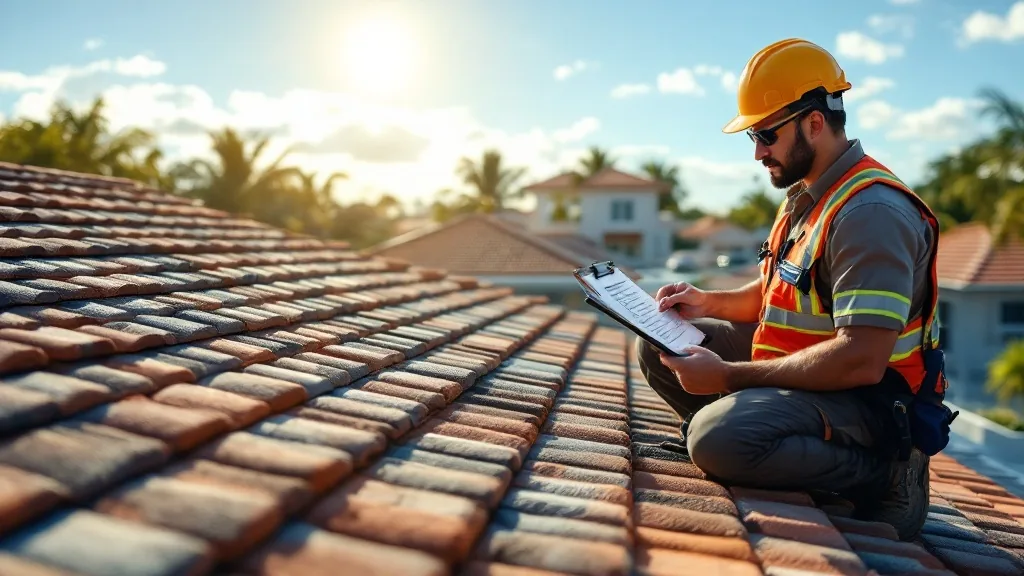
As a GC, I look at the 4-point report differently than a standard agent. When a 4-point shows Federal Pacific electrical panels, I know the immediate replacement cost ($3,500–$5,000). When it shows polybutylene plumbing, I know that system's failure risk and replacement cost. When it shows a roof at year 17, I know how many years remain. These items become specific numbers in the negotiation, not just red flags.
See the complete 4-Point Inspection Guide for what each section covers and how to respond when one fails.
The Wind Mitigation Inspection — Most Buyers Never File For This
A wind mitigation inspection costs $75–$150 and can reduce your insurance premium by 10–40% permanently. Yet most South Florida buyers never have one done at closing.
The inspection documents your home's hurricane-resistant construction features — roof shape, roof covering age, roof deck attachment, roof-to-wall connections, and opening protection. This report goes to your insurer and earns credits on your premium for every qualifying feature.
On a $6,000/year policy, a 25% wind mitigation credit saves $1,500/year — $15,000 over 10 years of ownership. The $100 inspection cost has a 15:1 return in year one alone.
I strongly recommend every buyer request a wind mitigation inspection as part of the purchase process. See the Wind Mitigation Guide for the full breakdown.
Citizens Insurance — What Buyers Need to Know
Citizens Property Insurance is Florida's state-backed insurer of last resort. It is now the largest insurer in Florida with over 1.3 million policies. Key facts buyers need to know about Citizens:
Answer a few simple questions and discover homebuyer programs, financing options, grants, and next steps — tailored to your South Florida situation.
Take The Homebuyer Qualification Quiz ›
- It is not cheaper: Citizens rates are often now equal to or higher than private market alternatives following recent rate reforms
- Depopulation program: Citizens is actively pushing policies to private carriers. If your property is selected, you may be moved to a private insurer — sometimes with a rate change
- Inspections required: Citizens requires a wind mitigation inspection and often a roof inspection for older homes before issuing new policies
- Coverage limits: Citizens has a maximum coverage limit ($700,000 for structures in most South Florida counties) — luxury homes above this threshold may require Citizens plus a private excess policy
- Solvency risk: In the event of a major hurricane, Citizens has a special assessment mechanism that can charge additional premiums to all Florida insurance customers — not just Citizens policyholders
What to Do Before Making an Offer on Any South Florida Property
- Get an insurance quote before falling in love with the property. Contact 2–3 South Florida insurance brokers with the property address and year built. This takes 24–48 hours and tells you the realistic monthly escrow cost before you write an offer
- Check the roof age. Ask the listing agent for the roof permit date or the property appraiser's record. If the roof is 15+ years old, insurance cost will be elevated and you will likely be required to replace it as a condition of coverage within a certain timeframe
- Have Roland do a pre-offer GC walkthrough. I identify the electrical panel type, check for visible plumbing material, assess the roof condition, and document the opening protection status before you make an offer — giving you a realistic insurance cost picture and negotiating leverage if issues exist
- Factor realistic insurance into your budget — not a national average or what a neighbor pays. South Florida costs are specific to the property, not a general number