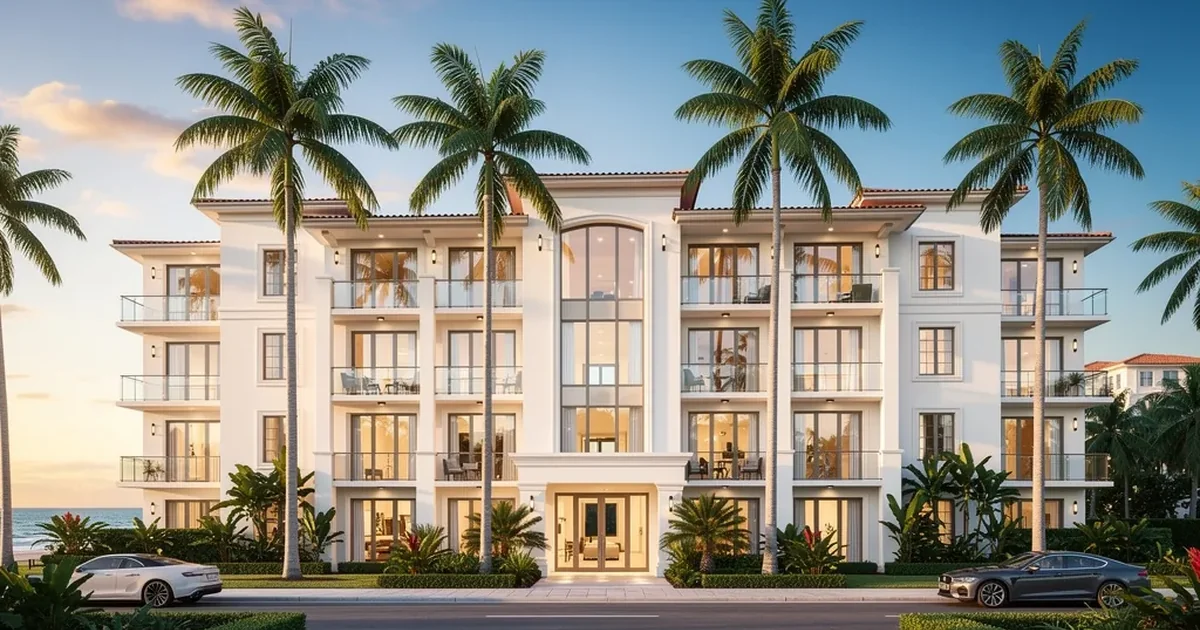
The Miami Apartment Building Market — 2026 Overview
Miami-Dade County's apartment building market occupies a unique position nationally. The combination of sustained population growth, structural undersupply of rental housing, no state income tax, and a global investor base creates persistent demand pressure that supports both rent levels and asset values across multiple economic cycles.
The sub-20-unit apartment building segment — the market I specialize in — has distinct characteristics that make it attractive to individual investors and small partnerships. These properties fall below the threshold of institutional interest, creating a persistent pricing inefficiency that informed, well-capitalized buyers can exploit.
In 2026, the Miami apartment building market is navigating a higher interest rate environment that has compressed buyer pools and created motivated seller situations — particularly among owners who bought during the 2020-2022 peak on aggressive projections that haven't materialized. For buyers with accurate underwriting and access to off-market deal flow, this environment creates opportunities that were inaccessible three years ago.
Where to Find Apartment Buildings for Sale in Miami
How I Evaluate Every Apartment Building Deal
Most real estate agents can look up what a property sold for. I can tell you what it will cost to maintain, what deferred maintenance is hiding in the walls, and whether the rent roll supports the asking price. Here is the complete evaluation framework I apply to every Miami apartment building deal:
Step 1 — Physical Assessment (GC Methodology)
Before running a single number, I walk the property as a licensed contractor. South Florida's specific challenges — humidity, hurricane exposure, high water table, termite activity, and the aging construction stock of the 1960s–1990s — require a trained eye. I assess:
- Roof condition and remaining life: Florida's heat and UV cycles degrade roofing faster than anywhere else. A 15-year-old flat roof on a Miami building may have 5 years left — or may need replacement now. This distinction directly affects your renovation budget
- Electrical systems: Federal Pacific and Zinsco panels from the 1960s–1970s are fire hazards requiring immediate replacement. I identify these before you make an offer
- Plumbing materials and condition: Cast iron drain lines in pre-1975 buildings, galvanized supply lines, and original sewer connections are all common in Miami's older apartment stock
- HVAC system ages: In South Florida's extreme heat load, AC units last 7–10 years vs. 15 nationally. Unit-by-unit HVAC ages are a line item in every renovation budget I build
- 40-year recertification status: Buildings 40 years or older in Miami-Dade must undergo mandatory recertification. An impending certification order changes everything about the deal's cost basis
- Unpermitted work: Extremely common in Miami's older multifamily stock. Affects financing, insurance, and resale. I pull permit records on every property
Step 2 — Financial Underwriting
After the physical assessment establishes the true renovation cost, I rebuild the property's financials from scratch:
| Line Item | What Sellers Show | What I Verify |
|---|---|---|
| Gross Potential Income | Current rent roll | Market rents verified by comp analysis |
| Vacancy | Often 0% or minimal | Market-rate 5–8% based on submarket |
| Property Taxes | Current owner's bill | Reassessed at purchase price — often 30–50% higher |
| Insurance | Current policy cost | Current South Florida market rates — 2–3x 2020 costs |
| Maintenance Reserve | Often understated | $1,200–$2,000/unit/year based on building age |
| Renovation Budget | Not included | Line-item GC budget by trade |
| True NOI | Seller's number | My reconstructed number — often 20–35% lower |
Get personalized guidance on FHA loans, down payment assistance, multifamily investing, and South Florida real estate opportunities — from a licensed GC who'll walk the property with you.
The difference between a seller's stated NOI and the true reconstructed NOI on a Miami apartment building is often $25,000–$60,000 annually. At a 7% cap rate, that difference translates to $357,000–$857,000 in valuation. This is why accurate underwriting isn't a nice-to-have — it's the difference between a profitable deal and an expensive mistake.
Current Listings & Off-Market Deal Flow
The best apartment building deals in Miami never hit Loopnet or CoStar. They come from three sources:
- Direct owner outreach: Properties showing visible deferred maintenance, high vacancy, or management neglect signal motivated sellers before they list publicly
- 40-year recertification situations: Owners receiving recertification orders — particularly estate situations and older owners on fixed income — are often motivated to sell before facing remediation costs
- Agent-to-agent networks: Off-market deals circulate through agent relationships before they're listed. My commercial real estate background and KW Premier Properties network gives access to this pre-market deal flow
Call me at 305-731-0387 or email Info@Realtor007.ai with your investment criteria — unit count, submarket preference, target cap rate, and budget. I'll match you to active deal flow including off-market opportunities that won't appear in any portal.