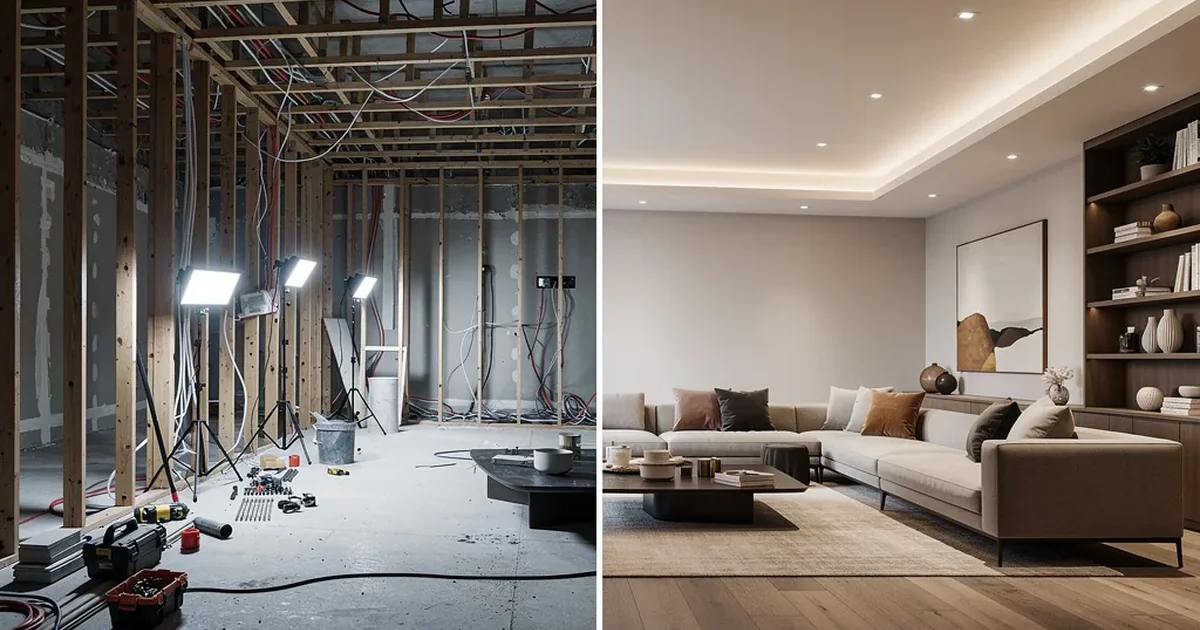
- ›BRRRR = Buy, Renovate, Rent, Refinance, Repeat — the core South Florida portfolio-building cycle
- ›Step 1: Acquire with hard money or cash at 65–75% of ARV (After Repair Value)
- ›Step 2: GC-supervised renovation — Roland's line-item budget prevents cost overruns
- ›Step 3: Rent at market — South Florida vacancy under 3% in workforce submarkets
- ›Step 4: DSCR cash-out refinance at stabilized rents — pull capital for next deal
What BRRRR Actually Is — No Hype
BRRRR stands for Buy, Rehab, Rent, Refinance, Repeat. The strategy's appeal is the refinance step: if you buy a distressed property, renovate it, rent it at market rates, and then refinance at the improved appraised value, you can potentially pull back most or all of your initial capital — leaving you with a rented, cash-flowing property with little or none of your own money tied up.
In theory, you could repeat this cycle indefinitely — building a portfolio of rental properties while recycling the same capital. In practice, South Florida's specific market conditions introduce variables that most national BRRRR guides don't address. This guide covers the real mechanics.
Step 1 — Buying Correctly: The 70% ARV Rule in South Florida
The foundational BRRRR purchase rule is the 70% ARV formula: your all-in cost (purchase + renovation) should not exceed 70% of the After Repair Value (ARV). This leaves 30% for profit, closing costs, holding costs, and refinance buffer.
In South Florida, this formula requires adjustment:
- Insurance adds to your carrying cost: A $450,000 ARV South Florida property carries $5,000–$7,000/year in insurance. During a 6-month renovation hold, that's $2,500–$3,500 in insurance carrying cost alone — not included in most national BRRRR calculators
- Renovation costs are 30–50% above national averages: See the Renovation Cost Estimator for real South Florida numbers. The national BRRRR "I can rehab a 1,500 sq ft house for $40,000" assumption is simply wrong here — a full rehab in South Florida runs $90,000–$175,000
- Permit time adds holding costs: Miami-Dade permit timelines for a full renovation can run 4–10 weeks. During that window, you're paying property taxes, insurance, and debt service without rental income
- Adjusted South Florida formula: Purchase + Renovation + Closing Costs + Holding Costs ≤ 65–68% of ARV. The tighter number accounts for South Florida's higher carrying costs
Target property: Homestead, 1,600 sq ft CBS, needs full rehab
Purchase price: $220,000
Renovation budget (GC estimate): $95,000 (full rehab — roof, kitchen, 2 baths, flooring, HVAC, electrical panel, paint)
Holding costs (8 months): $14,000 (insurance + taxes + utilities)
Closing costs (purchase): $8,000
Total all-in: $337,000
Estimated ARV: $420,000
All-in as % of ARV: 80.2% — too high for BRRRR, need to negotiate purchase to $195,000 or reduce scope
This is the analysis I run on every investor acquisition before recommending an offer.
Step 2 — Rehab Profitably: The GC Advantage
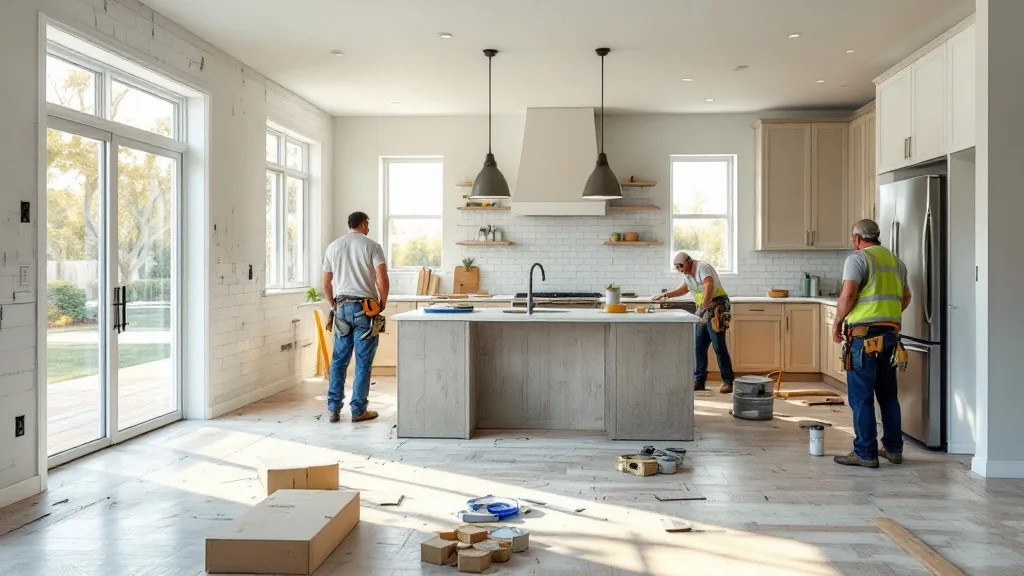
The rehabilitation phase is where the BRRRR strategy succeeds or fails in South Florida. Renovation overruns are the most common BRRRR killer — and they happen because most investors (and most real estate agents advising them) don't have a contractor's eye for what a property actually needs.
What separates a profitable BRRRR rehab from an expensive lesson:
- Scope precision before purchase: A vague "needs cosmetic work" description from a listing agent means nothing. I walk every property before offer recommendation and produce a specific scope: $12,000 roof credit needed, $3,500 panel replacement, $8,000 kitchen renovation, $6,000 flooring. That scope becomes the negotiation and the renovation budget simultaneously
- Permit strategy: Not everything needs a permit, but skipping permits that are required creates problems at refinance (the appraiser may flag non-permitted work) and resale. I advise on what requires permits and what doesn't for every South Florida renovation scope
- Investor-grade vs. luxury finishes: The BRRRR renovation is not designed to win design awards — it's designed to achieve maximum ARV per dollar spent. LVP flooring instead of tile. Mid-range cabinets instead of custom. Appliance packages instead of premium brands. Every dollar over investor-grade finish standard reduces your refinance spread
- Insurance compliance first: The refinanced property needs to be insurable. A BRRRR property that fails a 4-point inspection after renovation cannot be refinanced with a conventional lender — the lender requires insurance. Address roof age, panel type, and plumbing material as part of the renovation scope, not as an afterthought
Step 3 — Rent Immediately: South Florida Rental Market Reality
The faster you have a paying tenant, the lower your total BRRRR carrying cost. Target market rent by property type in key South Florida markets (2026):
| Market | 3BR/2BA Single Family | 2BR/2BA | Days to Lease (Avg) |
|---|---|---|---|
| Homestead / South Dade | $2,200–$2,600 | $1,700–$2,100 | 15–25 days |
| Hialeah | $2,400–$2,900 | $1,900–$2,300 | 10–20 days |
| North Miami / Little Haiti | $2,600–$3,200 | $2,000–$2,500 | 15–30 days |
| Broward — Pembroke/Miramar | $2,800–$3,400 | $2,200–$2,700 | 10–20 days |
| West Palm Beach | $2,500–$3,100 | $1,900–$2,400 | 15–25 days |
Renting before refinancing is important for lenders — most require a signed lease and proof of income collection (typically 1–3 months of rent deposits) before a cash-out refinance on an investment property.
Step 4 — Refinance Right: The Cash-Out Refi Mechanics
The refinance step is the most technically complex in BRRRR. Key mechanics for South Florida investors:

- Seasoning requirements: Most conventional lenders require the property to be owned for 6 months before a cash-out refinance. Some require 12 months. Plan your timeline accordingly — a renovation that completes in month 4 doesn't trigger a cash-out refi until month 6 minimum
- Maximum LTV on cash-out refi: Conventional investment property cash-out refinances are capped at 75% LTV (loan-to-value). On a $420,000 ARV, the maximum loan is $315,000. If your all-in cost was $337,000 and you can only borrow $315,000, you have $22,000 of your capital stuck in the deal — the BRRRR is incomplete
- DSCR loans — the alternative: Debt Service Coverage Ratio loans don't use your personal income for qualification — they qualify based on the property's rental income covering the debt service. DSCR loans in South Florida: typically 1.25x coverage required (rental income must be 125% of the monthly payment). Down payment/equity requirement: 20–25%. Rates typically 0.5–1.0% higher than conventional
- The appraisal is everything: The ARV you estimated pre-purchase is validated (or not) by the refi appraisal. A $420,000 ARV that appraises at $395,000 changes every number downstream. Comparable sales must support your ARV estimate before purchase — this is part of the pre-offer analysis I run
Roland's renovation estimate was within $3,200 of final actual cost on a $210,000 South Florida rehab. That precision is what changes how you underwrite a BRRRR deal. Submit your property for a pre-offer GC renovation budget.
Step 5 — Repeat: Capital Recycling Reality
A successful BRRRR where you recover 90–100% of your initial capital through the cash-out refi means you have those funds available for the next acquisition. In practice, South Florida BRRRR investors typically recover 70–90% of initial capital — leaving some equity in each deal while building a portfolio.
The more important measure than 100% capital recovery is return on remaining equity. If you have $30,000 left in a deal generating $300/month net cash flow after PITI, that's a 12% annual cash-on-cash return — a strong investment even without full capital recycling.
What Goes Wrong — The Most Common BRRRR Failures
- Renovation scope underestimated at purchase: The number one BRRRR killer. A $40,000 renovation estimate that becomes $85,000 destroys the ARV math entirely. GC assessment before offer prevents this
- ARV estimated from active listings, not comparable sales: ARV must be based on closed comparable sales — not what sellers are asking. An ARV derived from inflated asking prices produces a cash-out refi that falls short
- Permit issues discovered during refinance appraisal: An appraiser who identifies unpermitted additions will call them out in the appraisal report. Lenders often require resolution before funding the refinance. Pull permit records before purchase
- Insurance compliance not addressed in renovation: A renovated property that fails the 4-point inspection (old roof, Federal Pacific panel, polybutylene plumbing) cannot be insured — and cannot be refinanced. These items must be in the renovation scope
- Holding costs underestimated: South Florida's insurance costs, property taxes, and permit timelines make holding costs significantly higher than national BRRRR calculators suggest. Budget $1,500–$2,500/month for a typical South Florida BRRRR hold