Why a GC Reads an Inspection Report Differently
A home inspector's job is to identify and document deficiencies. They are generalists — trained to recognize problems across all home systems. A licensed General Contractor's job, after 20 years of building and fixing South Florida properties, is to understand what those deficiencies cost.

The difference is the number. When a home inspector writes "electrical panel shows evidence of double-tapping at multiple breakers," a standard buyer reads "electrical issue." I read "$400 electrician visit and a Federal Pacific panel I need to price — potentially $3,500–$4,500 for full replacement if it's Stab-Lok." That number changes the negotiation entirely.
This guide covers the red flags I look for on every South Florida property walkthrough — organized by system, with real repair cost ranges so you know what leverage you have before you make a decision.
Roof Red Flags — The Highest Stakes System
The roof is the single most inspection-critical system in a South Florida home purchase. Insurance companies specifically require 4-point inspections that document roof age and condition for any home 20+ years old. A failing roof can make a home uninsurable — which means unfinanceable. Here is what I look for:
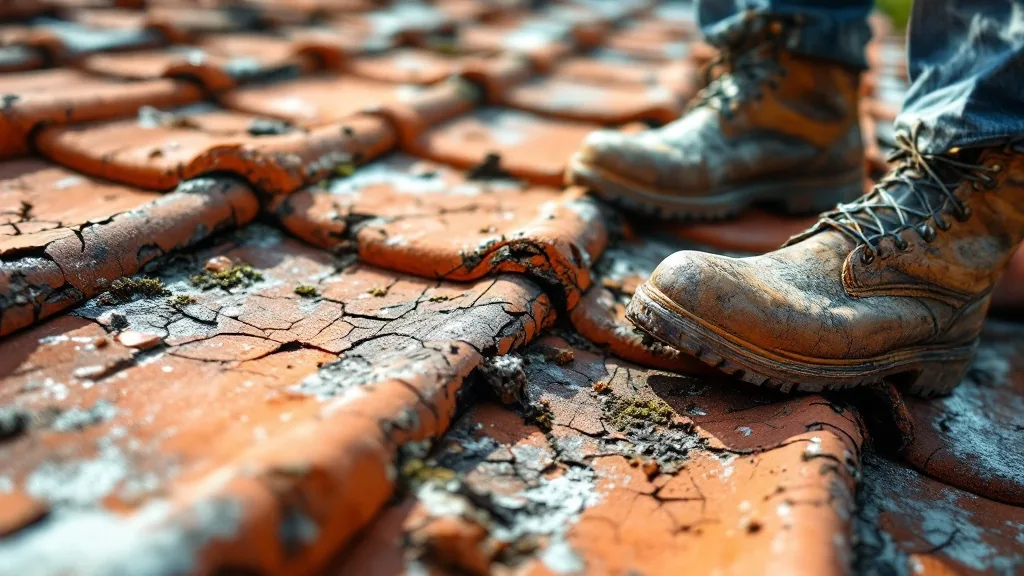
- Shingle age over 15 years: Visible granule loss in gutters, curling or cupping shingle edges, bare patches. South Florida's UV and heat accelerate shingle degradation to 15–20 year life vs. 25–30 nationally. Replacement cost: $8,000–$18,000 for a typical single-family home depending on size and pitch. This is a seller negotiation item
- Tile roof with broken or missing tiles: Concrete tile can last 50+ years but individual tiles break and the underlying underlayment degrades. Inspector notation of "multiple broken tiles" means I want a roofer assessing the deck and underlayment condition — not just the tiles. Underlayment replacement on a full tile re-roof: $12,000–$25,000
- Flat roof sections with blistering, ponding evidence, or exposed seams: Flat roofs on additions or garage covers are common in South Florida. Any notation of ponding water evidence, blistered membrane, or exposed seams means the section is approaching end-of-life. Modified bitumen replacement: $6–$12 per square foot
- Evidence of prior patching without permit: I pull the permit record on every roof. A roof replaced without permit in Miami-Dade means no inspection — which means no verification of hurricane strapping or deck attachment upgrades that affect both safety and insurance. An unpermitted re-roof can require a full redo to pass current code
- Fascia and soffit deterioration: Wood fascia and soffit in South Florida's humidity and heat rot from the outside in. Inspector photos showing soft, deteriorating fascia mean I want a ladder inspection of the rafter tails — if the rot has progressed to the structural framing, costs escalate from $500–$1,500 (fascia replacement) to $5,000+ (rafter tail repairs)
Every year of remaining useful life on a South Florida roof is worth approximately $500–$900 in insurance premium savings over its remaining life. A 17-year shingle roof has roughly 3–5 years of insurable life remaining. That's $1,500–$4,500 in future premium exposure on top of the $10,000–$15,000 replacement cost approaching. Use this math when requesting a seller concession.
Foundation Red Flags — What Actually Matters in Florida
Florida is a slab-on-grade state — the vast majority of South Florida homes are built on a concrete slab poured directly on compacted fill, not a crawl space or basement. This changes what foundation issues mean compared to other markets:
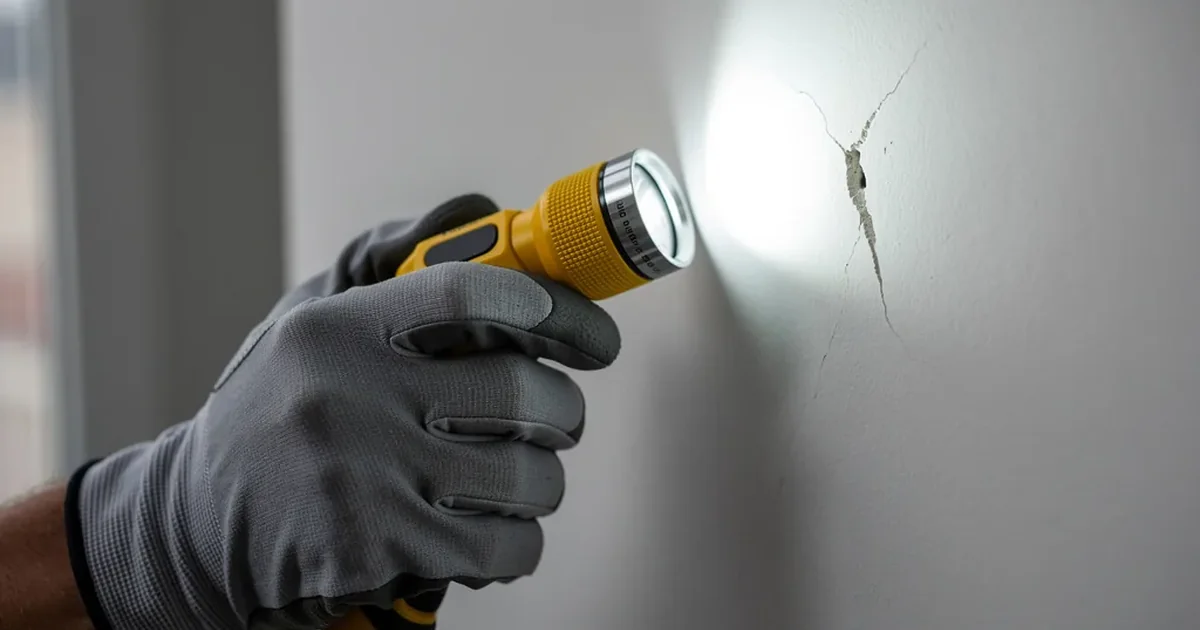
- Hairline cracks in the slab visible through flooring: In Florida's expansive soil environment and varying moisture conditions, minor slab cracking is common and often not structurally significant. The key question is crack width, pattern, and whether there is differential settlement (one side of the crack higher than the other). A hairline crack in a straight line with no differential: cosmetic. A stair-step pattern crack with differential movement: structural engineer required
- Doors and windows that stick or fail to close properly: In South Florida, this is one of the most reliable indicators of slab movement. The slab shifts, the frame shifts with it, and doors and windows jam. I check all interior doors during every walkthrough specifically for this. If more than one door is affected and the sticking is recent, I want a structural engineer's opinion before proceeding
- Diagonal cracks at wall corners, especially from window and door corners: Diagonal cracks propagating from the corners of window and door openings are a classic sign of differential foundation settlement. The crack width, length, and whether it's active (expanding) or historical matters. A structural engineer assessment runs $400–$800 and is essential for any property with these patterns
- Visible separation between wall and ceiling, or wall and floor: Gaps between the wall and adjacent surfaces indicate significant movement. These are not cosmetic issues — they indicate the structure is still moving or has moved substantially. Do not proceed without a structural engineer
- Soil subsidence visible at the perimeter: South Florida's fill soil can compact and subside, pulling away from the foundation perimeter. A gap between the foundation and the surrounding soil visible around the perimeter of the home indicates potential for continued movement. More common in areas with organic fill or near former wetlands
Minor slab repairs (crack injection, surface patching): $500–$2,000. Mudjacking or slab lifting for settled sections: $1,500–$5,000. Piering for significant differential settlement: $10,000–$30,000+. Foundation issues are the most expensive residential repair category — they require accurate diagnosis before any number can be given.
For any property with multiple sticking doors, diagonal cracks at openings, or visible separation, I coordinate a structural engineer's assessment as part of the inspection period before the buyer commits.
Electrical Red Flags — The Insurance and Safety Issues
Electrical issues in South Florida homes fall into two categories: safety hazards and insurance disqualifiers. Some are both. Here is what I look for specifically:
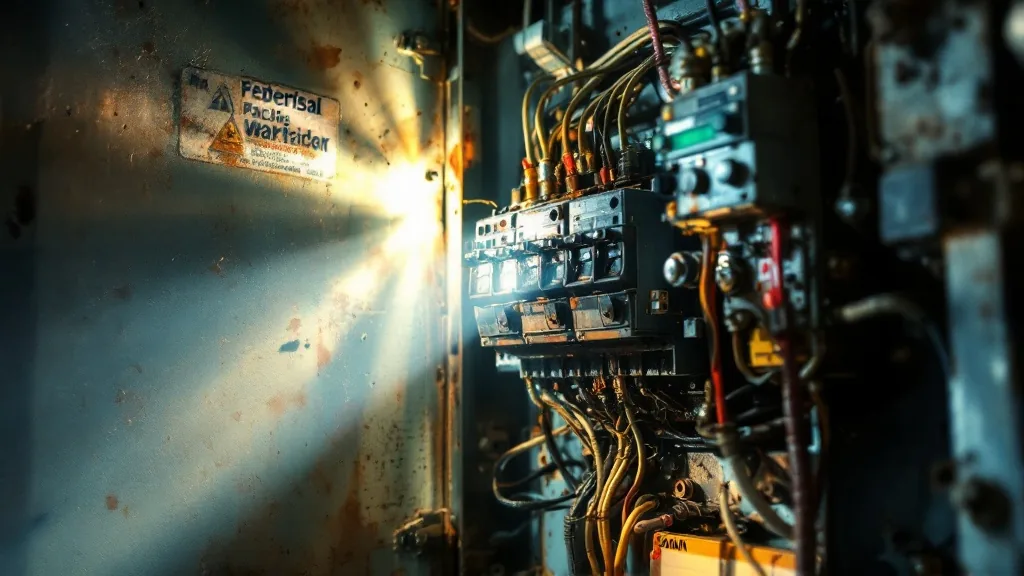
- Federal Pacific Stab-Lok panels: Identified by the brand name on the panel door or the distinctive Stab-Lok breakers inside (they look like standard breakers but the contacts are documented to fail under overload). Multiple studies confirm these panels fail to trip at a higher rate than other panels — meaning they can allow a circuit to overheat without tripping the breaker. Most South Florida insurers refuse to write new policies on homes with these panels or charge significant surcharges. Replacement cost: $2,500–$4,500
- Zinsco / GTE-Sylvania panels: Identifiable by colored breakers (green, blue, yellow). The breakers are documented to fuse to the bus bar over time, making them impossible to trip and creating sustained overload risk. Same insurance issue as Federal Pacific. Replacement cost: $2,500–$4,500
- Double-tapped breakers: Two wires connected to a single breaker designed for one wire. Very common in South Florida homes after electrical upgrades were added over the decades without proper expansion. A qualified electrician can address this without panel replacement — cost: $400–$1,200 depending on number of violations. Inspector notation of "multiple double-taps" means the panel was modified without proper evaluation
- Aluminum wiring to outlets and switches: Used in some 1960s–1970s construction as a cheaper copper alternative. At connection points — outlets, switches, junctions — aluminum and copper have different expansion rates, which over decades loosens connections and creates arcing risk. Not an automatic deal-breaker, but requires specific remediation: CO/ALR-rated devices at every outlet and switch, or complete rewiring. Remediation (CO/ALR devices): $1,500–$4,000. Full rewire: $8,000–$20,000
- Undersized service for the home's actual load: Older South Florida homes with 60A or 100A service attempting to run modern AC systems, electric water heaters, and kitchen appliances are chronically overloaded. A whole-house AC upgrade alone typically requires 200A service. Service upgrade cost: $1,500–$3,500
- GFCI protection absent in required locations: Any outlet within 6 feet of a water source (kitchen, bathroom, garage, exterior) requires GFCI protection under current code. Older homes without this are common in South Florida. Correction cost: $50–$150 per outlet — but the volume can add up
Plumbing Red Flags — Materials That Fail and Cost Thousands
- Polybutylene (PB) supply pipe: Gray or blue flexible plastic pipe installed from the 1970s through mid-1990s. Chlorine in municipal water causes internal degradation — the pipe looks fine externally but is failing from within. Insurers either refuse to cover or charge significant surcharges. Full replacement: $4,000–$15,000 depending on home size and accessibility. This is a high-stakes discovery
- Galvanized steel supply lines: Common in pre-1970 South Florida construction. Corrodes from the inside, progressively restricting flow and eventually leaking. Often discovered when a buyer notices weak water pressure or brown water during the inspection period. Replacement to copper: $4,000–$12,000
- Cast iron drain lines without camera inspection: Standard in South Florida construction through the mid-1970s. The only way to accurately assess condition is a drain camera scope. Interior corrosion, joint failures, and root intrusion are common. A camera scope costs $150–$300. A failing cast iron drain line costs $3,000–$8,000 to replace sections, or $8,000–$20,000 for a full re-pipe. For any pre-1980 South Florida home, I request a drain camera scope as part of every buyer's inspection package
- Evidence of prior leaks at supply line shutoffs: Mineral deposits or staining at shutoff valves under sinks indicates prior slow leaks. Check the cabinet floor for soft spots — water-damaged cabinetry concealed by repainting is a common South Florida flip disclosure issue
- Water heater age over 10 years: South Florida's hard water accelerates water heater sediment buildup and tank degradation. A 12-year water heater is on borrowed time. Replacement cost: $800–$1,800 including installation
Answer a few simple questions and discover homebuyer programs, financing options, grants, and next steps — tailored to your South Florida situation.
Take The Homebuyer Qualification Quiz ›HVAC Red Flags — South Florida's Critical Life-Safety System
- System age over 10 years: In South Florida's climate, air conditioning runs 10–12 months per year — significantly shortening lifespan versus national norms. A 12-year system may work today but is approaching end-of-life. Full system replacement (air handler + condenser): $5,000–$12,000
- R-22 refrigerant systems: R-22 (Freon) was phased out federally — replacement refrigerant is now extremely expensive and increasingly unavailable. Any R-22 system needing a refrigerant charge (due to leak or low charge) faces $600–$1,200 for refrigerant alone, where a newer refrigerant system would cost $100–$200. This accelerates the argument for full replacement
- Evidence of mold growth at air handler or ductwork: Visible mold at the air handler, supply plenums, or visible duct sections means potential mold distribution throughout the entire duct system. In South Florida's humidity, mold in the HVAC system is a serious air quality issue — and remediating it is more complex than surface mold. See the Mold Guide for full cost detail
- Air handler location in attic without proper drainage: South Florida air handlers in attics without properly functioning condensate drain and secondary drain pan are a water damage waiting to happen. A clogged condensate line in a second-floor attic installation can release several gallons of water into the ceiling before anyone notices. I verify condensate drain function and secondary pan condition on every attic air handler
- Visibly deteriorating flexible ductwork: Flexible duct in South Florida attics — exposed to extreme heat — degrades and collapses over time. Collapsed flex duct means restricted airflow, rooms that don't cool, and overworked equipment. Ductwork replacement: $2,000–$6,000
Water Intrusion Signs — The Most Concealed Issues
Water intrusion in South Florida is the most commonly concealed condition in resale properties. Here is specifically what I look for that inspection reports often miss:
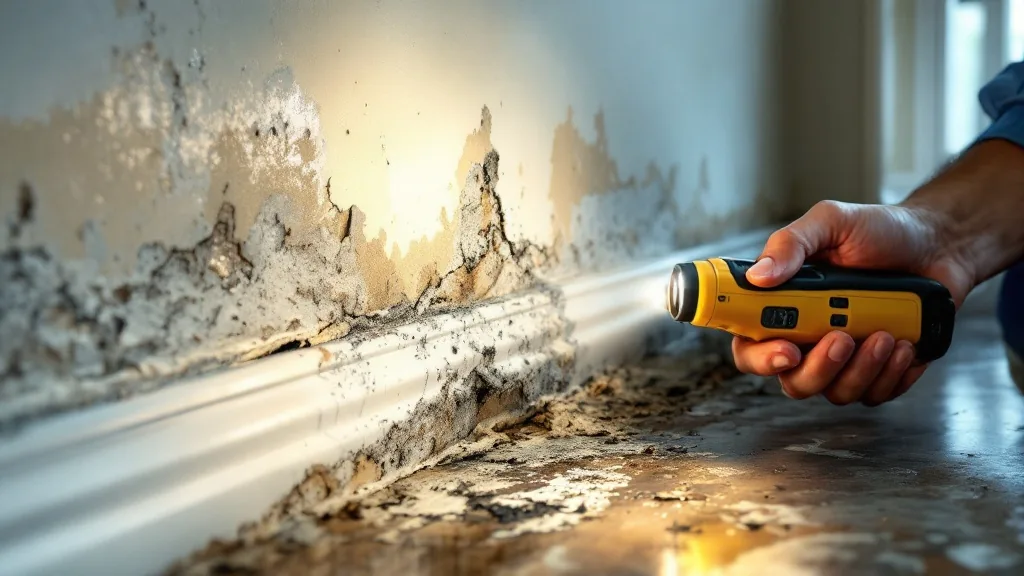
- Fresh paint on the lower 18 inches of interior walls: One of the most reliable flip red flags in South Florida. A seller who painted only the bottom portion of walls — rather than a full-room repaint — is concealing water staining from flooding or plumbing leaks. I check the back of baseboards and probe the drywall at lower walls in any room with evidence of localized fresh paint
- Soft spots in flooring: Any soft, springy, or spongy area in tile or hardwood flooring indicates moisture damage to the subfloor or the adhesive below. In South Florida slab construction, this means moisture intrusion from below through the slab or a plumbing leak above
- Efflorescence on exterior CBS walls or foundation: White crystalline deposits on concrete block or foundation indicate water is migrating through the masonry and depositing minerals. More significant in older South Florida homes — it indicates ongoing moisture movement that may be causing interior damage
- Musty smell in any room or closet: In South Florida's humidity, a musty smell is never "just old house smell." It indicates active mold growth somewhere in the room — behind walls, under flooring, in the closet framing. A smell without visible evidence means investigation, not dismissal
- Staining at the base of exterior doors: South Florida's wind-driven rain can force water under exterior door thresholds. Staining or discoloration at the base of any exterior door indicates past intrusion that may have damaged the floor system or door framing below the threshold
How to Use Inspection Findings as Negotiating Leverage
Every red flag documented in an inspection report is a negotiating data point — not a reason to panic or walk away. Here is the framework I use with every buyer client:
- Quantify every finding. Convert inspector language into dollar amounts. "Evidence of prior water intrusion in garage" becomes "$800–$1,500 for moisture remediation and drywall repair if limited in scope; $3,000–$8,000 if subfloor or framing is affected — camera scope needed to determine"
- Separate cosmetic from material. Chipped tiles, minor caulk failures, and dated fixtures are cosmetic — they don't support price reductions. Structural concerns, electrical panel replacements, roof age, and plumbing material issues are material defects that warrant seller action or price adjustment
- Request repair, credit, or price reduction — in that priority order. Seller-completed repairs have the advantage of being done before closing. Credits give you cash at closing but require you to manage the work. Price reductions adjust your basis. All three have value depending on the situation
- Use the inspection period deadline as a negotiating clock. In Florida, once the inspection period expires, you typically lose your right to exit with earnest money based on inspection findings. I coordinate all assessment completion, contractor estimates, and negotiation before that deadline
- Know when to walk. If the aggregate of material defects exceeds what the seller will address — and exceeds the value the property offers even at the reduced price — walking is the right answer. An inspection period is a buyer's protection, not a commitment