
Why Florida Is Different — And Why National Lists Miss the Point
There are dozens of "10 Mistakes First-Time Buyers Make" articles online. Almost none of them are specific to Florida. They don't mention the 4-point inspection requirement. They don't explain what happens when insurance costs collapse your DTI approval. They don't warn you about the March 1 homestead exemption deadline that every new Florida homeowner needs to know.
This list is specific to South Florida in 2026 — written from 20 years of GC experience and 7 years of commercial and residential real estate advisory work. These are the mistakes I watch buyers make, and the ones that cost real money.
Mistake 1 — Not Getting Insurance Quotes Before Falling in Love With a Property
This is the most expensive mistake South Florida first-time buyers make — and the most common. A buyer finds their dream home, gets emotionally invested, writes an offer, gets pre-approved, goes through inspections — and then discovers the actual insurance premium when the policy is issued, days before closing.

The insurance cost — $5,000–$8,000/year on many South Florida properties — is held in escrow and paid monthly as part of your PITI payment. A $6,000/year insurance premium adds $500/month to your mortgage. If your pre-approval DTI calculation used a national average of $1,800/year, you are $350/month short — and the lender may ask how you plan to cover it, or worse, re-run your DTI at the actual rate and reduce your approval.
The fix: Get a realistic insurance quote on any target property before going under contract — not after. Call 2–3 South Florida insurance brokers with the property address, year built, and roof age. Takes 24 hours. Eliminates the most expensive surprise in South Florida real estate.
Mistake 2 — Skipping Down Payment Assistance Research
South Florida has the most generous homebuyer assistance programs in the United States. Miami-Dade County alone offers up to $80,000 in combined assistance for qualifying first-time buyers. Broward County offers up to $120,000 in Weston. Palm Beach County offers $175,000 through Boca Raton's city program. Florida Hometown Heroes offers up to $35,000 to any Florida-employed worker.
The vast majority of first-time buyers who qualify for these programs never apply for them because nobody told them they existed. The average eligible buyer in Miami-Dade is leaving $35,000–$70,000 on the table. See the complete South Florida Grants Directory and verify your eligibility before assuming you need a large down payment.
Mistake 3 — Walking Into a New Construction Sales Office Without a Buyer's Agent
This mistake is specific to South Florida's active DR Horton new construction market — and it costs buyers real money, silently. DR Horton builds the buyer agent commission into every home price. If you walk in unrepresented, that commission stays with the builder. Their on-site representative works for DR Horton. You get no GC inspection at pre-drywall or final walkthrough. You have no independent advocate reviewing your contract.

The fix: Call 305-731-0387 before visiting any new construction sales office. Registration takes 5 minutes. The GC-backed representation costs you nothing — the builder pays. The protection is significant.
Mistake 4 — Ignoring the Homestead Exemption Deadline
The Florida Homestead Exemption saves up to $50,000 off your assessed value and permanently caps your annual assessment increase at 3%. The deadline to file is March 1 of the year following your purchase. Miss it and you lose the benefit for that entire year — and start the following year from a higher assessed value than necessary.
This mistake is entirely preventable — set a calendar reminder the day you close. File at your county property appraiser's online portal starting January 2 of the following year. Takes 20 minutes. See the complete Homestead Exemption Guide.
Mistake 5 — Making Major Purchases Between Pre-Approval and Closing
The period between mortgage pre-approval and closing is the most dangerous time to change your financial picture. Buyers who buy a car on credit, open a new credit card, finance furniture, or take on any new debt during this window risk their loan approval — sometimes days before closing.
Your lender pulls credit again before closing. Any new debt or new credit inquiry that changes your DTI or credit score can trigger re-underwriting — or outright denial. The new car payment of $450/month that felt justified because you're moving somewhere that needs a car? That $450 could push your back-end DTI from 42% to 46% — above the approval threshold. You lose the home. You may lose your earnest money.
The rule: No new credit applications. No major purchases on credit. No large cash withdrawals. No job changes. From pre-approval to closing, your financial profile must be frozen.
Mistake 6 — Skipping the Wind Mitigation Inspection
A wind mitigation inspection costs $75–$150 and can permanently reduce your South Florida homeowners insurance by 10–40%. Most first-time buyers never have one done at closing — because nobody tells them about it. On a $6,000/year insurance policy, a 25% wind mitigation credit saves $1,500/year. That's $15,000 over 10 years from a $150 inspection.
See the complete Wind Mitigation Guide and request this inspection as part of your purchase process. Roland coordinates it for every buyer client.
Mistake 7 — Using the Seller's Disclosure as the Only Source of Truth
Florida's seller disclosure form requires sellers to disclose known material defects. The operative word is "known." A seller who has never investigated the attic doesn't know about the mold on the roof decking. A seller who inherited the property doesn't know about the Federal Pacific panel that the previous owner never disclosed to them.

The seller's disclosure is a starting point — not a completion. Your independent inspections (home inspection, 4-point, wind mitigation, and GC walkthrough) are the actual due diligence. Treating the seller's disclosure as sufficient protection has cost South Florida buyers six-figure remediation bills on defects the seller genuinely didn't know about because they never looked.
Mistake 8 — Not Understanding What HOA Financial Health Means
Answer a few simple questions and discover homebuyer programs, financing options, grants, and next steps — tailored to your South Florida situation.
Take The Homebuyer Qualification Quiz ›HOA communities dominate South Florida's housing stock — gated communities, planned developments, condo buildings, and townhome complexes. Buyers routinely ask how much the monthly HOA fee is. Almost none of them ask about the HOA's reserve fund adequacy.
An HOA with an underfunded reserve fund is a special assessment waiting to happen. When the roof of a 20-unit complex needs replacement and the reserve fund is $40,000 short, each owner gets a bill for $2,000. When a condo building's elevator system needs replacement and reserves are inadequate, each unit owner faces a $5,000–$15,000 assessment. Request the HOA's most recent reserve study and financial statements before going under contract on any HOA property.
Mistake 9 — Letting the Inspection Period Expire Without Acting
The inspection period is the most valuable protection in a Florida real estate contract — the window during which you can cancel for any reason and recover your earnest money. The standard South Florida inspection period is 10–15 days. Many buyers schedule their inspection on Day 10 and receive the report on Day 13 — leaving 2 days to negotiate complex findings.
I schedule GC walkthroughs on Day 3–5 of the inspection period — giving maximum time to evaluate findings, get contractor cost estimates for material issues, and negotiate with the seller before the deadline. A roof issue that requires $14,000 in replacement discovered on Day 5 gives you 5–10 days to negotiate. Discovered on Day 13: you're negotiating under deadline pressure or losing your protection window.
Mistake 10 — Comparing South Florida Payments to National Calculators
The mortgage payment calculators on Zillow, Bankrate, and most national sites use default assumptions for taxes and insurance that are completely wrong for South Florida. A calculator that assumes $1,800/year for homeowners insurance and 1.2% for property taxes will show you a "monthly payment" that is $600–$900 per month lower than your actual PITI in South Florida.
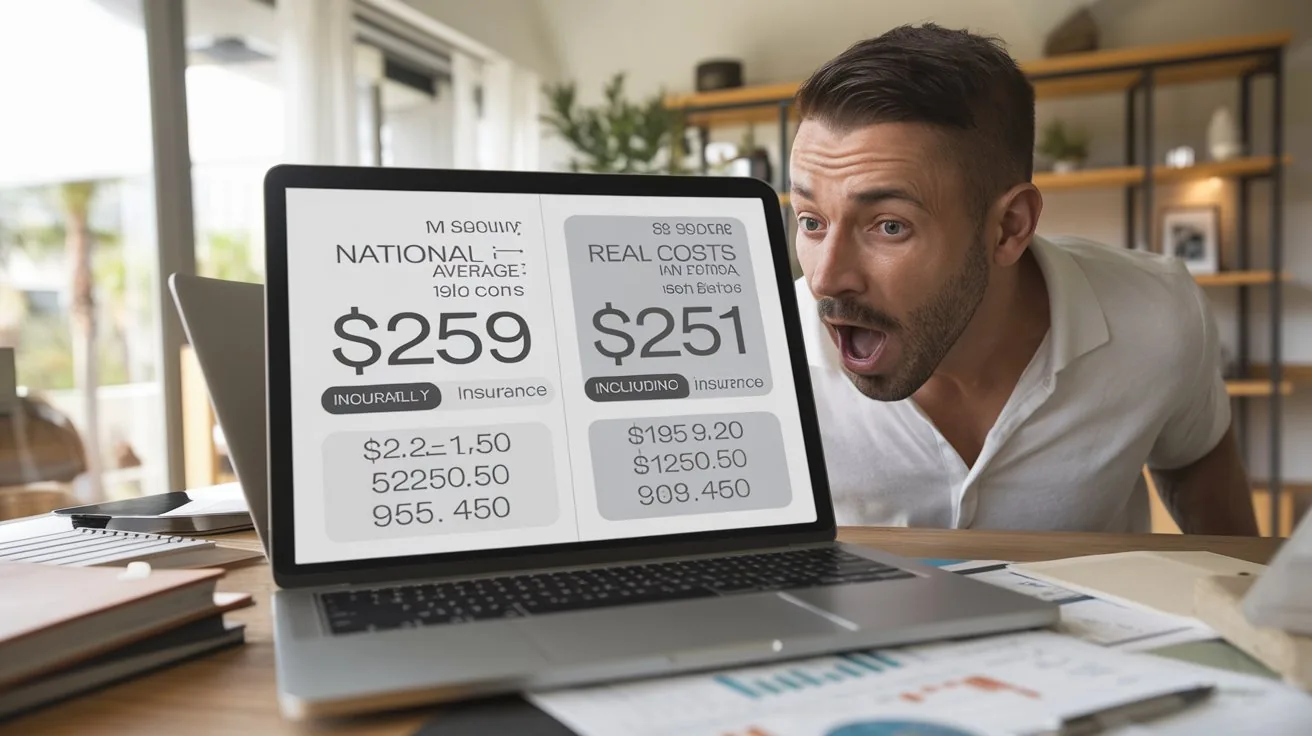
To calculate your real South Florida payment: get an actual insurance quote on your target property, use the actual property tax rate from the county appraiser (not a national default), and include HOA fees if applicable. The "monthly payment" you see on a listing page is not what you'll pay. The PITI — Principal, Interest, Taxes, Insurance, and HOA — is what you'll actually write a check for every month. Know this number before you fall in love with a price range.
Every single mistake on this list is prevented by one thing: having an informed, experienced buyer's representative who has seen them all before. Roland Ruiz has walked through these situations hundreds of times across 20 years of South Florida construction and 7 years of real estate advisory work.
Buyer representation is free. The seller pays on resale. The builder pays on new construction. The protection is real. Call 305-731-0387 before you do anything else.