
The FHA Appraisal Is Two Jobs in One
A conventional appraisal has one job: determine market value. An FHA appraisal has two jobs: determine market value and assess the property against HUD's Minimum Property Standards (MPS) and Minimum Property Requirements (MPR). If the property fails MPS/MPR, the loan cannot fund — regardless of value.


This is why FHA buyers in South Florida sometimes discover deal-threatening conditions after they're already emotionally and financially committed to a property. The appraiser is required to flag any condition that threatens the health, safety, or security of the occupants — and South Florida's aging housing stock has specific conditions that trigger these flags with regularity.
This guide was written by Roland Ruiz, a licensed General Contractor with over 20 years of South Florida construction experience. The GC walkthrough Roland performs before every buyer offer is designed specifically to identify FHA-flaggable conditions before the appraisal is ordered — while you still have full negotiating leverage.
What FHA Appraisers Are Required to Flag
HUD Handbook 4000.1 defines the conditions FHA appraisers must identify and report. The categories most relevant to South Florida properties:
Roof Condition
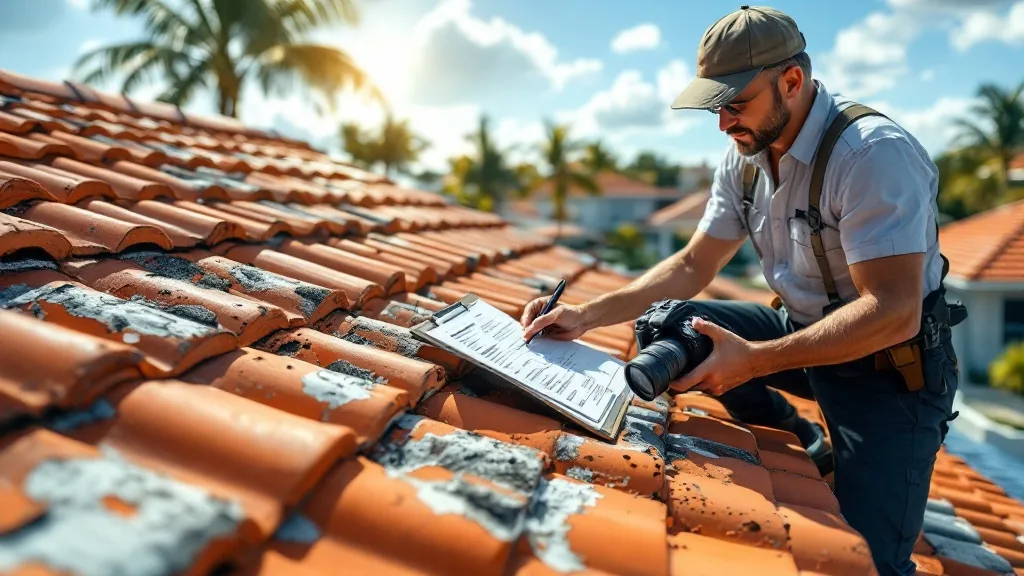
- Remaining useful life under 2 years: If the appraiser determines the roof has less than 2 years of remaining useful life, FHA requires it to be replaced or the condition to be documented with a repair escrow before funding. In South Florida where shingle roofs are replaced every 15–20 years, a 17–18 year old shingle roof is a high-probability FHA flag
- Active leaks: Any evidence of active roof leak — water staining on ceilings, damaged decking visible in the attic — must be repaired before FHA will fund
- Multiple layers of shingles: More than two layers of roofing material requires complete tear-off and replacement before FHA will insure the loan
Electrical Conditions
- Exposed wiring: Any visible exposed conductors — in the garage, attic, or anywhere accessible — must be corrected before funding
- Missing GFCI protection: FHA requires GFCI outlets within 6 feet of water sources in kitchens, bathrooms, garages, and exterior locations. Missing GFCI in these locations is a required correction
- Knob-and-tube wiring: Active knob-and-tube wiring in original condition requires an electrical inspection confirming it is safe — in practice this almost always results in a required upgrade
- Double-tapped breakers that are flagged hazardous: Depending on the extent and appraiser's assessment, electrical deficiencies may require a licensed electrician's sign-off before FHA funds
Plumbing and Water
- Active plumbing leaks: Any visible active leak at supply lines, drain lines, or fixtures must be repaired before funding
- Hot and cold water functional at all fixtures: The appraiser tests water at fixtures. Non-functional hot water or pressure issues trigger a required correction
- Water heater temperature and pressure relief valve: The TPR valve must be present and properly piped to discharge safely — a missing or improperly configured TPR valve is a required FHA correction
Foundation and Structure
- Evidence of significant settlement or movement: Diagonal cracks at door and window openings, sticking doors throughout the home, or visible differential settlement visible at the exterior may trigger a structural engineer requirement before FHA funds
- Cracks allowing water intrusion: Foundation or wall cracks large enough for water to enter the structure must be addressed
Lead-Based Paint (Pre-1978 Properties)
- Peeling, chipping, or flaking paint on any surface: For properties built before 1978, the FHA appraiser must identify and flag all deteriorated paint. The seller must address deteriorated paint conditions before FHA funding — either by repainting the affected surfaces or, in some cases, encapsulation. This is one of the most common FHA conditions in South Florida's abundant pre-1978 CBS stock
Health and Safety
- Evidence of wood-destroying insects (WDI): FHA requires that termite activity or damage be addressed. A current WDO inspection is required in most FHA transactions
- Inoperable heating or cooling: In South Florida, a non-functional air conditioning system is a habitability concern. The appraiser will test HVAC and flag inoperability
- Broken windows or inoperable doors: Broken glass, broken locks on exterior doors, or windows that cannot close are health and safety flags
South Florida-Specific FHA Flags
South Florida has enormous inventory of pre-1978 CBS block construction — particularly in the Homestead, South Dade, Hialeah, and older Broward corridors. FHA's lead paint rules require the seller to address all deteriorated paint on any surface of a pre-1978 property before the loan can fund. This includes exterior paint that is peeling due to South Florida's UV and humidity exposure.
A seller who hasn't painted the exterior in 10 years may have significant peeling that triggers a required exterior paint job before FHA closing. At $3,000–$8,000 for exterior painting on a typical South Florida single-family, this is not a trivial condition — and it is entirely avoidable if identified before the offer.
Answer a few simple questions and discover homebuyer programs, financing options, grants, and next steps — tailored to your South Florida situation.
Take The Homebuyer Qualification Quiz ›What Happens When FHA Appraisal Has Conditions
An FHA appraisal with conditions is not an automatic deal-killer — but it requires action before the loan can fund. Three paths forward:
- Seller completes required repairs before closing: The most common resolution. The seller addresses the appraiser-flagged conditions, the appraiser re-inspects (at buyer's cost, typically $150–$200), and the lender funds. Timeline adds 1–3 weeks to closing
- FHA Repair Escrow (203(b) Escrow Holdback): For minor repairs (typically under $10,000) that can be completed quickly, FHA allows an escrow holdback at closing — funds are held and released to the contractor after work is completed post-closing. Not all lenders offer this; ask specifically whether your lender handles FHA repair escrow
- Price reduction + buyer completes repairs: The seller reduces the purchase price by the repair cost. The buyer takes ownership and completes repairs. This only works if the condition does not represent an immediate health or safety hazard — some conditions require correction before FHA will fund regardless of who pays
How a Pre-Offer GC Walkthrough Prevents the FHA Appraisal Surprise
The conditions that trigger FHA appraisal flags are almost always visible to a trained eye during a pre-offer walkthrough. Peeling exterior paint, an aging roof, missing GFCI protection, active plumbing leaks, and exposed wiring are all observable before you go under contract — while you still have full leverage to require the seller to repair or adjust the price.
Discovering these same conditions after the appraisal is ordered means you are negotiating under deadline pressure, potentially with earnest money at risk if the seller refuses to remedy and you must walk away. Roland performs a pre-offer GC walkthrough identifying FHA-flaggable conditions on every buyer representation property — at zero cost to the buyer.