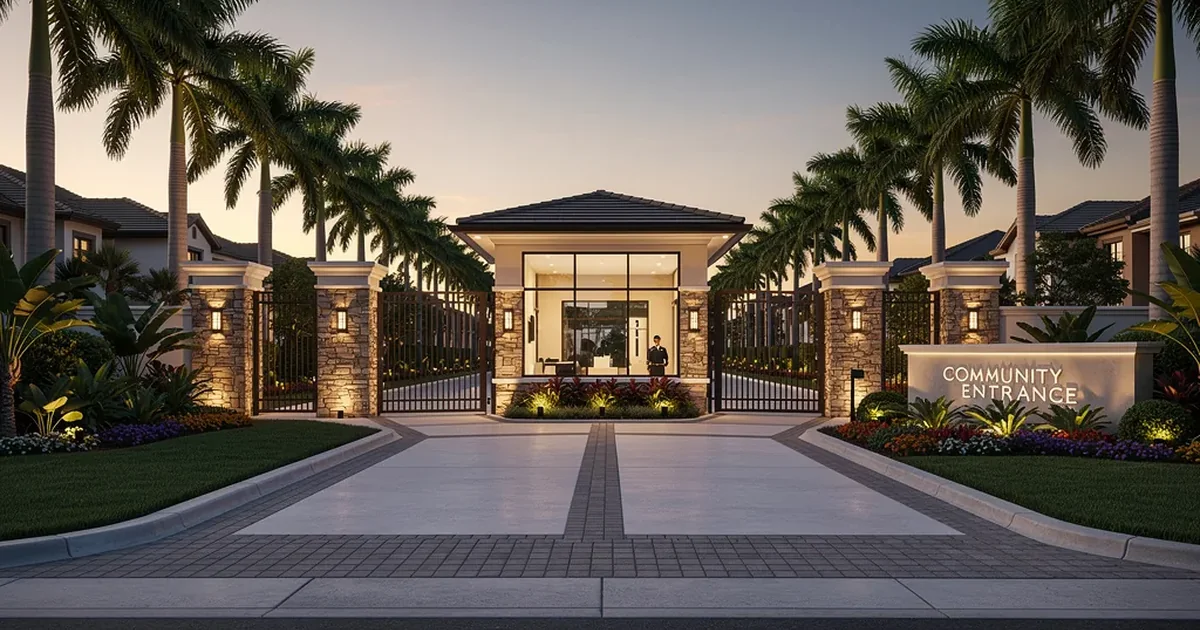
South Florida HOA Fee Ranges — What to Expect by Property Type
| Property Type | Typical Monthly HOA | What's Usually Included |
|---|---|---|
| Single-family in basic HOA community | $150–$300 | Common area maintenance, community pool, basic landscaping of common areas |
| Single-family in amenity-rich gated community | $300–$600 | Gate staffing, multiple pools, fitness center, parks, security, common area maintenance |
| Townhome (HOA maintains exterior) | $250–$500 | Exterior paint, roof, common areas, landscaping — unit exterior is association responsibility |
| Garden condo (2–4 stories) | $300–$600 | Exterior maintenance, roof, common areas, pool, often includes water/trash |
| Mid-rise condo (5–10 stories) | $500–$900 | Building exterior, elevators, common areas, sometimes water/trash, parking structure |
| High-rise luxury condo (15+ stories) | $800–$2,000+ | Building exterior, elevators, concierge, valet, pools, fitness, security, utilities sometimes |
| Post-Surfside assessment-burdened buildings | Variable — increased | Plus structural reserve funding now mandatory |
What HOA Fees Cover — and What They Don't
Understanding what is and isn't the HOA's responsibility is essential before purchasing any HOA property. This varies by community but general frameworks:
- Common areas: Always HOA responsibility — pools, fitness centers, clubhouses, common landscaping, community roads and parking structures (if private)
- Exterior of the building (condos and some townhomes): Paint, roof, windows, structural elements — HOA responsibility in most condo and many townhome communities. Verify specifically what the Declaration of Condominium says
- Interior of your unit: Almost always your responsibility — HVAC, plumbing within your unit, electrical, flooring, walls, appliances
- Your homeowners insurance: Almost never covered by HOA. You need your own policy covering your unit's interior and personal property (HO-6 policy for condos)
- Utilities: Varies by community — some HOAs include water and trash; most single-family HOAs do not include any utilities
- Gate security staff: Included in fees for staffed gated communities. Not applicable to non-gated or camera-only gated communities
How to Evaluate HOA Financial Health
The HOA fee you see in a listing is the current monthly amount. Whether that amount is sustainable — or will increase, or trigger special assessments — depends on the association's financial health. Here is how to assess it:
- Request the most recent 3 years of audited financial statements: Look for: is the association running operating deficits? Are reserve funds growing or declining? Are there significant accounts payable (unpaid bills) suggesting cash flow issues?
- Request the current reserve study: The reserve study identifies each major component (roof, HVAC for common areas, pool equipment, elevators, paving) with its estimated remaining life and replacement cost. It also shows the current reserve funding level as a percentage of the funded goal
- Calculate reserve funding percentage: A fully funded reserve is 100%. Most South Florida associations are 60–80% funded — which is acceptable. An association at 20–30% funded has a significant deficit that will eventually result in either sharply increased fees or special assessments
- Review meeting minutes for the past 3 years: Discussions of current major expenses, deferred maintenance items, contractor bids, legal disputes, and any votes on special assessments or fee increases are documented here. This is often the most revealing document in the package
- Check for pending or recent special assessments: Ask the seller's agent directly: has any special assessment been approved or discussed by the board in the past 12 months? Verify with the association's management company
Red flags that indicate elevated special assessment risk:
Reserve funding below 30% of the funded goal. Operating deficits in the financial statements. Large deferred maintenance items discussed in meeting minutes without funding plans. Significant delinquencies — if more than 15% of unit owners are behind on HOA payments, the association has less revenue to fund reserves and operations. Pending litigation that could result in significant judgments against the association. Fee increases of more than 15–20% in a single year — often a sign the prior fee was inadequate. Multiple vendors or contractors with unpaid invoices.
Special Assessments — South Florida Reality Post-2022
A special assessment is a one-time charge levied by the HOA on all unit owners to fund a capital expense not covered by reserves. Since Florida's new condo laws took effect requiring mandatory structural reserve funding, special assessments in South Florida have become significantly more common — particularly in older condominium buildings that spent years with inadequate reserves.
- Range: $2,000 (minor common area repair) to $100,000+ per unit (major structural remediation in underfunded older building)
- Payment options: Some associations allow installment payment; others require lump sum. Review the payment terms when evaluating any pending assessment
- Seller responsibility: In many cases, approved but unpaid special assessments transfer to the buyer at closing — the seller pays the outstanding amount through the estoppel letter. Always request a current estoppel letter that shows any pending or approved special assessments before closing
- Future assessment risk: Even if no current assessment is pending, a building with underfunded reserves is at elevated risk of future special assessments. The SIRS or reserve study indicates this risk quantitatively
Answer a few simple questions and discover homebuyer programs, financing options, grants, and next steps — tailored to your South Florida situation.
Take The Homebuyer Qualification Quiz ›Questions to Always Ask Before Buying Any HOA Property
- What is the current monthly fee — and has it increased more than 10% in either of the past 2 years?
- Is there any pending or approved special assessment, or has any been discussed in board meetings in the past 12 months?
- What is the reserve funding percentage from the most recent reserve study?
- Has the building completed its Milestone Inspection (if applicable — 3+ stories, 25+ years old)?
- Has the building completed its SIRS (Structural Integrity Reserve Study)?
- What deferred maintenance items are identified in the meeting minutes that have not yet been funded?
- Is there any pending litigation involving the association?
- What percentage of units are owner-occupied vs. rented? (relevant for FHA and VA financing)