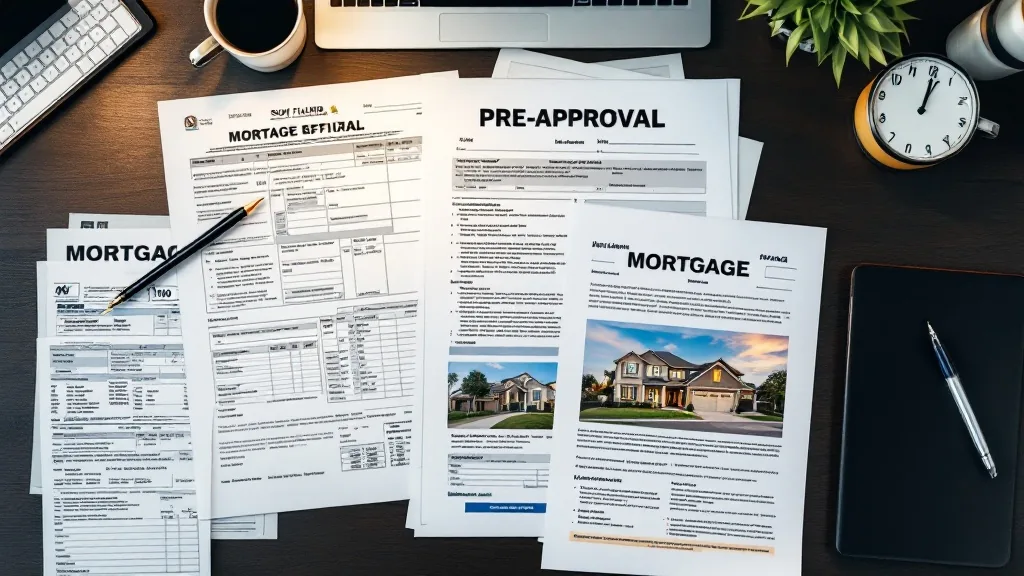
A lender may ask for documents that show who you are, how you earn money, what you own, what you owe, and where your closing funds come from. The request is not always the same for every buyer. A salaried employee, a self-employed buyer, and a buyer receiving gift funds may each have a different checklist.
What mortgage underwriting checks
In plain English, underwriting checks whether the information in your application can be supported. Lenders generally verify income, employment, assets, debts, credit history, and the property being financed. The underwriter may also review insurance, title, appraisal, and other property-specific items.
- Identity: Who is applying?
- Income and employment: Is qualifying income documented and reasonably expected to continue?
- Assets: Are the down payment, closing funds, and reserves available and properly sourced?
- Debts and credit: What current obligations affect the loan decision?
- Property: Does the appraisal, title work, insurance, and loan program support the transaction?
Core document checklist
Use this as an organizing guide. Your lender’s written condition list controls the real file.
| Category | Documents commonly requested | Why they may matter |
|---|---|---|
| Identity | Government-issued photo ID, Social Security information, current address history | Confirms the borrower and supports credit and fraud checks. |
| Employment income | Recent pay stubs, W-2 forms, employer verification, sometimes tax returns | Helps document current earnings and employment history. |
| Self-employment | Personal and business tax returns, year-to-date profit-and-loss statement, balance sheet, business bank records, license or business verification when applicable | Helps the lender evaluate business income, stability, and whether business withdrawals affect operations. |
| Other income | Retirement, Social Security, disability, alimony, child support, rental, bonus, commission, or other supporting records when used to qualify | Shows the amount, history, and expected continuation of qualifying income. |
| Assets and closing funds | Recent bank, investment, or retirement account statements; earnest money proof; sale-of-asset records; gift documentation when applicable | Shows that funds are available and helps explain where money came from. |
| Debts and housing history | Statements for obligations not fully shown on credit, lease or mortgage history when requested, explanations for disputed or unusual items | Helps the lender calculate obligations and resolve inconsistencies. |
| Property and transaction | Signed purchase contract and addenda, appraisal, title information, homeowners and flood insurance information when applicable, condominium documents when required | Connects the borrower’s loan file to the actual property and loan program. |
What makes a document usable
A document can be real and still be unusable if it is incomplete. Before uploading, check that every page is included, the account holder’s name is visible, dates are readable, and no information has been cut off. Do not alter a document to make it look cleaner.
- Send complete statements, including blank pages when the statement includes them.
- Use readable PDF files or clear scans.
- Keep account numbers protected when your lender’s secure portal allows masking, but do not hide information the lender specifically requires.
- Do not email sensitive documents through an unverified address. Confirm the lender’s secure upload method.
- Keep the original file after uploading.
Large deposits and money movement
Unusual deposits or transfers can create follow-up questions because the lender may need to verify the source of funds. This does not automatically mean something is wrong. It means the file may need a clear paper trail.
Before moving money, taking a new loan, changing bank accounts, or depositing cash, ask your loan officer how it could affect documentation. A good paper trail may include the source statement, transfer confirmation, deposit record, gift documentation, or sale receipt.
Why documents may be requested again
Underwriting is not always a one-time upload. Pay stubs, bank statements, employment information, credit information, insurance, or other items may need to be refreshed before closing. A new request does not necessarily mean denial. It may mean the lender needs current information or an answer to a specific condition.
A simple organization system
- Create one secure folder for the transaction.
- Add subfolders for identity, income, assets, debts, property, insurance, and lender conditions.
- Name files clearly, such as Checking-Statement-May-2026.pdf.
- Save the lender’s latest condition list.
- Track what was sent, when it was sent, and whether the lender accepted it.
- Ask for clarification when a request is unclear instead of guessing.
Questions to ask your lender
- Which documents are required for my exact loan program and income type?
- Do you need every page of each statement?
- Which deposits or transfers need to be sourced?
- Are any conditions still outstanding?
- Will any documents expire or need to be updated before closing?
- What is my total estimated cash to close, not only my down payment?
- Does the estimated payment include taxes, homeowners insurance, HOA dues, and flood insurance when applicable?
- Is this payment only a number the lender allows, or is it healthy for my life?
Your next calm step
Ask your lender for a written, personalized checklist and use this page to organize the categories. You can also review the Florida real estate financing guide, the South Florida homebuyer guide, and the homebuyer readiness quiz. For questions about how the financing step fits into your property search, contact Roland.