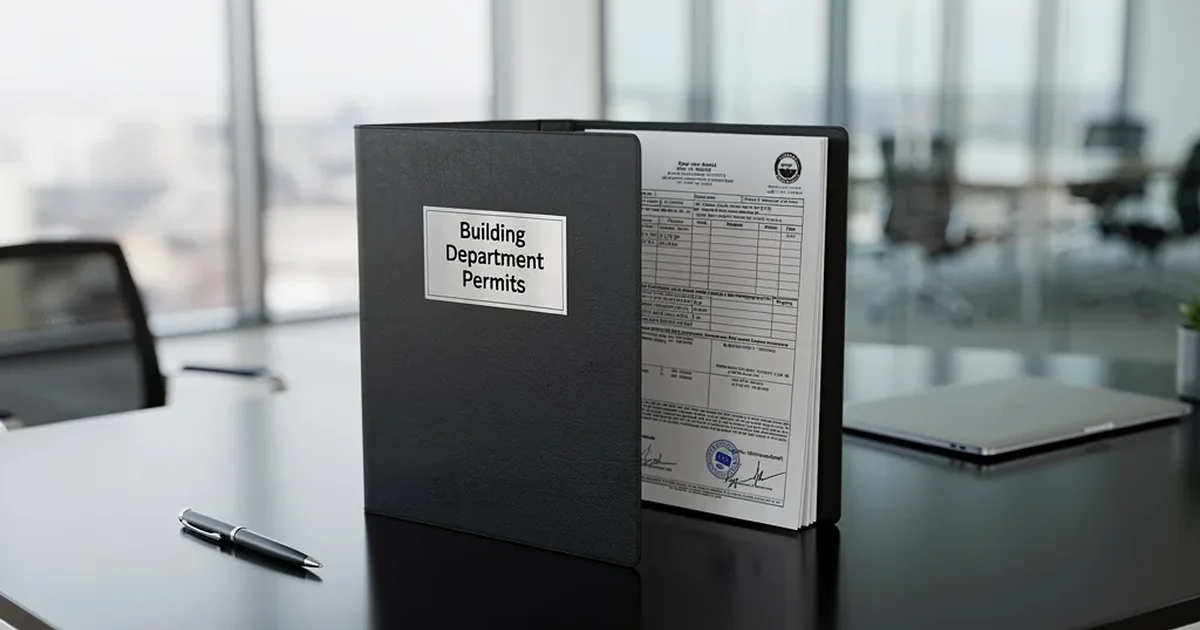
Open Permits — What They Are and Why They Matter
When a building permit is pulled for construction work, it creates an open record in the county's permit system. The permit remains open until a final inspection is passed and the county closes it out. Many South Florida properties have permits that were pulled, work was done, but the final inspection was never scheduled or passed — leaving the permit permanently open.
Open permits on a property you're buying matter because:
- They can affect title insurance: Title companies search permit records. Open permits may be flagged as title exceptions — meaning the title company notes them as potential issues that may affect ownership. Some lenders won't close a loan with certain open permits
- The work may not have been inspected: If a permit was pulled for electrical work, plumbing, or structural modifications but never had a final inspection, the work may not meet code — and you won't know until the county inspects it, possibly requiring corrections at your expense
- The county can require you to resolve them: As the new owner, you can become responsible for resolving a prior owner's open permit. This can mean scheduling inspections, making corrections, and paying fees on work you didn't do
- They can surface during a sale: When you eventually sell the property, any open permits you didn't resolve will be discovered by the next buyer's due diligence — becoming your problem again at a future closing
Expired Permits — Different From Open Permits
An expired permit is one where work was begun under permit authority but the permit expired before the work was completed and inspected. In Florida, permits typically expire after 180 days with no inspection activity. An expired permit means:
- The work that was started under the permit may be partially built and partially uninspected
- To re-open the permit, the contractor or owner must re-apply, may face current code requirements (more stringent than when originally permitted), and must pay additional fees
- If the structure was built under an expired permit without any inspection, it is effectively unpermitted work — the permit process was started but never completed
Notices of Violation — The Most Serious Permit Issue
A Notice of Violation (NOV) is an official enforcement action from the county or municipality — a formal order requiring the property owner to correct a specific code violation within a defined timeframe. NOVs appear in county records and typically show up in title searches.
Active NOVs pass with the deed. If a property has an open NOV for an unpermitted addition and you close on the purchase without resolving it, you become the responsible party — now subject to the correction order, the compliance timeline, and any penalties for continued non-compliance.
NOVs can include: fines that accrue daily while unresolved, orders to demolish non-conforming structures, mandatory inspection requirements, and liens that attach to the property.
How to Search for Permit Issues in South Florida
Three separate records to check on every property:
- County permit portal: Miami-Dade (miamidade.gov/permits), Broward (epermitonline.broward.org), Palm Beach (pbcgov.com/pzb). Search by address. Look for: open permits with no final, expired permits, any permit with "violation" or "stop work" notation
- Municipal records (if incorporated): Properties within City of Miami, City of Homestead, City of Hollywood, etc. have dual permit records — county AND city. Search both. A city building department may have issued an NOV that doesn't appear in the county system
- County Code Enforcement records: Miami-Dade Code Enforcement, Broward Code Division, and Palm Beach Code Enforcement each maintain searchable records of violations and enforcement actions. These are separate from building permit records. An NOV from code enforcement may or may not correlate with a building permit record
Impact on Closing — What Open Permits Can Do
- Title exceptions: The title company notes open permits as exceptions to clean title. The buyer's attorney reviews — most are acceptable with appropriate language in the contract, but some lenders require resolution before closing
- FHA and VA loans: FHA and VA appraisers are specifically required to identify and report safety issues, code violations, and conditions that indicate unpermitted work. An open permit for work that involved safety systems (electrical, structural) may require resolution before FHA/VA loan approval
- Seller obligation: In Florida, sellers are required to disclose known material defects — and an open NOV is a material defect. But permit records are also public, and the buyer's due diligence (or their agent's) is expected to find them. Not finding an open NOV before closing because nobody checked is a buyer due diligence failure
How to Resolve Permit Issues Before Closing
- For open permits with a final inspection never scheduled: The original permit holder (contractor) or the property owner can schedule the final inspection. If work passes: permit closes. If work has issues: corrections required, re-inspection needed. Timeline: 2–6 weeks typical. Requires coordination with the county's scheduling system
- For expired permits on work that was completed: Re-apply for the permit, submit as-built documentation, pay new permit fees (and potentially additional fees for late/re-application). Schedule inspections. Timeline: 4–10 weeks typical
- For Notices of Violation: Contact the issuing code enforcement officer, determine the correction required (permit and pass inspection, demolish the violation, or other remedy), complete the required action within the NOV's compliance deadline. Legal counsel recommended for complex NOVs with accrued fines
- Negotiate with the seller: The seller should resolve permit issues and NOVs before closing — this is a material condition of the property. If the seller cannot or will not resolve them, the cost of resolution should be reflected in a price reduction or escrow holdback for the buyer to complete post-closing
Answer a few simple questions and discover homebuyer programs, financing options, grants, and next steps — tailored to your South Florida situation.
Take The Homebuyer Qualification Quiz ›