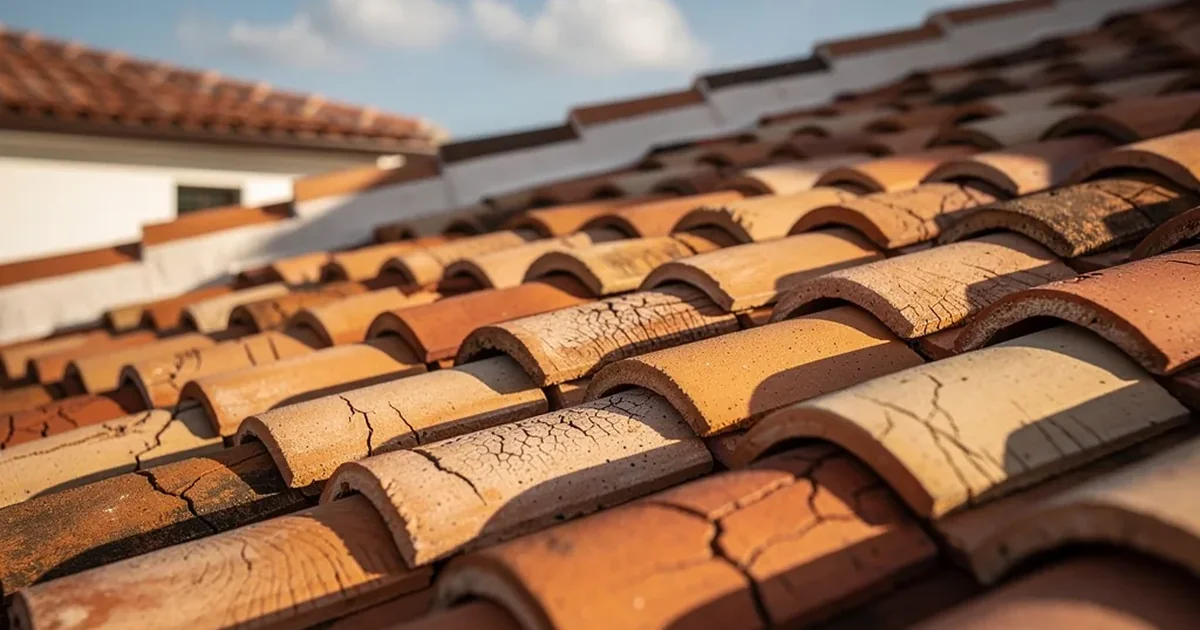
How Old Is "Old" for a Roof in South Florida?
South Florida's climate shortens roof lifespan significantly compared to national averages. Intense UV radiation, heat cycles, and hurricane season put more stress on roofing materials per year than virtually any other U.S. market. Here are the realistic useful life ranges in this specific climate:
| Roof Type | National Avg Life | South Florida Reality | Insurance Watch Zone |
|---|---|---|---|
| 3-Tab Shingle | 20–25 years | 12–18 years | 12+ years |
| Architectural Shingle | 25–30 years | 18–25 years | 15+ years |
| Concrete Tile | 40–50 years | 35–45 years (underlayment 20–25 yrs) | 20+ years on underlayment |
| Metal Roofing | 50–70 years | 40–60 years | Not typically flagged until 30+ |
| Flat / Modified Bitumen | 15–20 years | 10–15 years | 10+ years |
A 15-year-old shingle roof in South Florida is not dramatically different from a 20-year-old shingle roof in Ohio — both are near end of useful life. The South Florida-specific factor is that the insurance market here responds to roof age more aggressively than anywhere else in the country.
Roof Age and Insurance — This Is the Real Problem
In most of the country, an aging roof is a maintenance issue. In South Florida, it is an insurability issue. Most South Florida insurance carriers apply the following policies to older roofs:
- Shingle roofs 15–20 years old: Many carriers will insure but charge elevated premiums. Some require a roof inspection certification before binding coverage. A few will only write if the buyer commits to replacement within 2–3 years
- Shingle roofs over 20 years: Most major carriers will refuse to write a new policy. You are limited to specialty insurers, Citizens (state insurer of last resort), or making roof replacement a condition of the purchase
- Tile roofs over 20 years: More nuanced — the tiles themselves may be fine, but the underlayment beneath them typically has a 20–25 year life. A tile roof inspection by a licensed roofer assesses underlayment condition specifically. Carriers may insure if a roofer certifies the underlayment has remaining life
- Any roof the 4-point inspector notes as having less than 2 years remaining useful life: FHA will require replacement before funding; most conventional lenders will require proof of insurance before funding, and insurance may not be available
The practical implication: before going under contract on any South Florida property with a roof over 15 years old, get an insurance quote first. Call 2–3 South Florida insurance brokers with the property address, year built, and roof age. Find out whether coverage is available and at what cost. This single step prevents the most common South Florida purchase surprise.
FHA and Old Roofs — A Specific Problem
If you're using an FHA loan, roof age creates an additional constraint. The FHA appraiser must assess whether the roof has at least 2 years of remaining useful life. If the appraiser determines it does not, roof replacement becomes a required condition before the FHA loan can fund. This means:
- The seller must replace the roof before closing, OR
- The lender must agree to a repair escrow holdback (available at some lenders for amounts typically under $10,000), OR
- The deal falls through because the seller won't replace and there's no escrow solution
For FHA buyers specifically, a roof showing its age should be assessed by a licensed roofer during the inspection period — not just the home inspector. A roofer's certification of remaining useful life is more defensible in an FHA context than a home inspector's estimate. See the full FHA Appraisal Problems Guide.
When Old Roof = Negotiating Leverage Worth $10,000–$18,000
An aging roof in South Florida is not automatically a reason to walk away. It is a documented, quantifiable problem — and documented, quantifiable problems are negotiating leverage. Here is how this works in practice:
Roland walks the property during the inspection period. Roof shows evidence of 16-year shingle life — granule loss in gutters, some curling at edges, permit record confirms installation in 2009. Insurance quote comes back $2,000/year higher than a new roof would carry, and the carrier requires replacement within 2 years as a condition. Replacement cost: $13,500 for this property's size.
The seller now has three choices: replace the roof before closing at their cost, provide a $13,500 closing credit for the buyer to replace it, or reduce the purchase price by $13,500. This is not a walk-away situation — it is a $13,500 reduction in what you effectively pay for the property, negotiated using documented GC assessment and contractor pricing.
Answer a few simple questions and discover homebuyer programs, financing options, grants, and next steps — tailored to your South Florida situation.
Take The Homebuyer Qualification Quiz ›When to Walk Away on an Old Roof
Walking away is appropriate when the seller refuses any remedy and the deal economics don't work at the current price given the cost of inevitable roof replacement. Specifically:
- The roof is uninsurable at any reasonable premium and the seller won't replace it
- The combined roof replacement cost plus any other inspection findings exceed what the current purchase price + costs can absorb and still make the purchase financially sound
- The roof shows signs of active leakage that has already caused hidden damage the seller won't disclose or address
All of these scenarios are identifiable during the inspection period — while your earnest money is still protected by the inspection contingency.