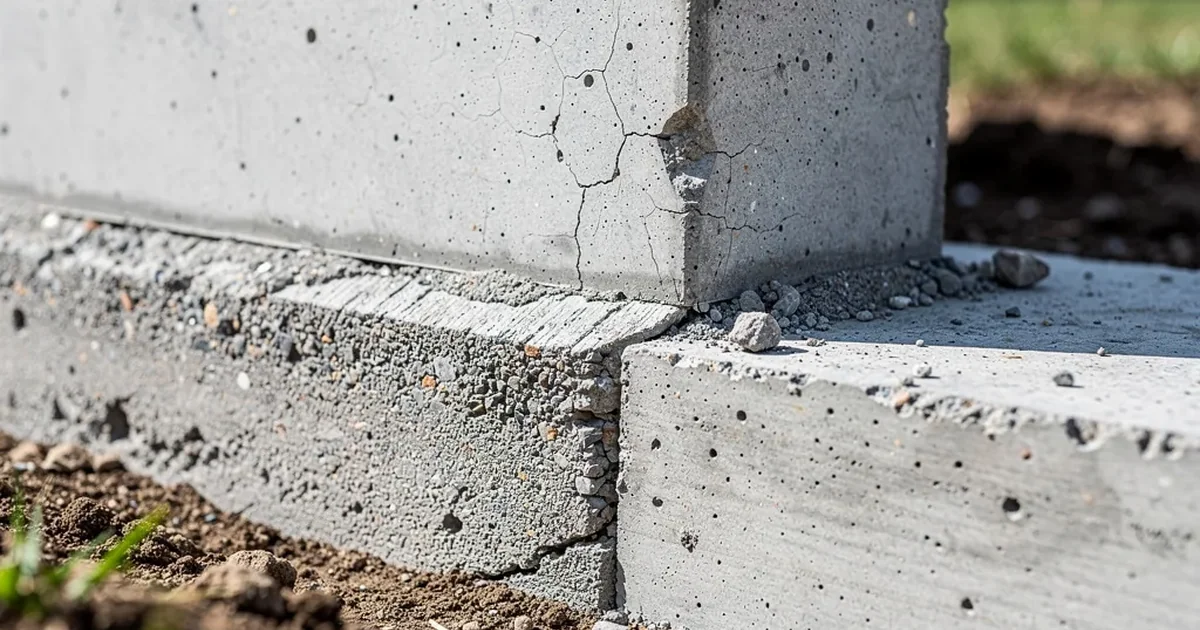
Florida Slab Construction — Why It's Different
The vast majority of South Florida residential construction is slab-on-grade — a concrete foundation slab poured directly on compacted fill material, with the home built on top of it. There is no crawl space, no basement, no post-and-beam foundation like you see in other parts of the country.
This has important implications for how foundation cracks form and what they mean. Slab-on-grade foundations crack for different reasons than other foundation types — and the diagnostic criteria are different. What would be a serious concern in a Northeast basement foundation may be routine in a South Florida slab, and vice versa.
The key causes of slab cracking in South Florida: concrete shrinkage during curing (normal, predictable, cosmetic), soil settlement under the slab (can be cosmetic or structural depending on uniformity), expansive soil movement from moisture changes (South Florida's organic fill and clay pockets cause this), and poor original compaction during construction (a pre-construction issue that manifests years later).
The Crack Classification System — Plain English
When I look at a crack in a South Florida home, I evaluate five characteristics:
- Width: Hairline (under 1/16") vs. wide (1/8"+). Width indicates how much movement has occurred. Hairline cracks are almost always shrinkage — the concrete doing what concrete does
- Pattern: Straight (shrinkage), stair-step at masonry joints (differential settlement), diagonal from openings (settlement at specific load points), horizontal (rare in slab — more relevant to retaining walls)
- Differential: This is the most important indicator. Is one side of the crack at a different elevation than the other? Any vertical differential — one side higher than the other — indicates differential settlement: one part of the slab moved differently from another. This is the key structural concern
- Location: Cracks in the garage slab are common and almost always non-structural — garage slabs are typically a separate pour from the structural slab. Interior cracks propagating through multiple rooms in a continuous pattern are more concerning
- Active or historical: Is the crack still opening? Fresh concrete dust along the crack, monitoring marks that have shifted, or seasonal variation all indicate ongoing movement versus a crack that occurred years ago and stabilized
Cosmetic Cracks — What You Can Safely Ignore
- Hairline cracks in the garage slab: Almost always concrete shrinkage from the original pour. The garage slab is typically a separate, non-structural pour. These are cosmetic in virtually every South Florida home and not worth negotiating over
- Hairline cracks in interior tile grout lines: Tile grout cracks from normal house movement, thermal expansion, and slight slab deflection. No differential, no pattern extending beyond the tile field, no widening: cosmetic
- Stucco cracks on the exterior, straight vertical: Stucco is a brittle finish coat that cracks with thermal movement and minor framing deflection. Straight vertical stucco cracks with no structural correlate (no interior cracking in the same location, no sticking doors nearby): cosmetic patch, $200–$600
- Non-structural partition wall cracks: Interior walls that are not load-bearing can crack from normal house settlement without indicating foundation movement. Key check: does the crack correlate with door sticking, floor level changes, or exterior cracking in the same area?
Structural Cracks — What Requires Investigation
Diagonal cracks propagating from window or door corners: The most reliable indicator of differential foundation movement in a CBS (concrete block) South Florida home. Load concentrates at opening corners — when the slab moves differentially, these corners crack first and propagate diagonally. Width over 1/16" and any differential movement: structural engineer required.
Cracks with measurable vertical differential: Run a level across any crack wider than 1/16". If one side is measurably higher or lower than the other, differential settlement has occurred. The question is whether it has stabilized. Only a structural engineer can determine this.
Multiple doors sticking throughout the home: One sticking door is often just humidity swelling or a settling hinge. Two or more doors throughout the home that stick in the same season, particularly if they've worsened over time, indicates ongoing slab movement affecting the entire frame.
Visible separation between walls and ceilings or walls and floors: Gaps that weren't caulked over — raw drywall separation at the ceiling or floor line — indicate significant movement. This is not a cosmetic issue.
Foundation Repair Cost Ranges — South Florida 2026
| Issue | Repair Method | Cost Range | Notes |
|---|---|---|---|
| Hairline crack injection (cosmetic) | Epoxy or polyurethane injection | $500–$1,500 | Seals crack, restores appearance. No structural benefit |
| Slab settlement (moderate) | Mudjacking / slab lifting | $1,500–$5,000 | Pumps material under slab to raise settled sections |
| Significant differential settlement | Steel piering / underpinning | $10,000–$30,000+ | Piers driven to stable strata. Per-pier pricing $1,500–$3,000 |
| Structural engineer assessment | Site visit + written report | $400–$800 | Essential first step for any structural concern |
| Full slab replacement (rare) | Demolition + new pour | $30,000–$80,000+ | Usually only for total destruction scenarios |
Answer a few simple questions and discover homebuyer programs, financing options, grants, and next steps — tailored to your South Florida situation.
Take The Homebuyer Qualification Quiz ›The Walk-Away Line
Foundation issues are the one category where I advise buyers most conservatively. Unlike a roof replacement or panel upgrade with predictable costs, foundation problems can cascade — particularly in South Florida where fill soil variability means the cause of movement can be difficult to fully remediate.
I typically recommend walking away when: a structural engineer finds active, ongoing differential settlement with no clear, cost-defined solution; the estimated remediation cost exceeds 10% of purchase price and the seller won't fully remediate before closing; or the foundation issue has triggered cascading damage to framing, drywall, tile, and exterior that compounds the remediation cost unpredictably.
Foundation issues that have fully stabilized — confirmed by a structural engineer, with documentation of monitoring marks over time showing no additional movement — can be acceptable depending on remediation cost and purchase economics. The engineer's opinion, not my visual assessment, is what governs this decision.